A 360° virtual tour is a digital experience that lets you move through a space from a computer or phone. The person doesn't just see a photo: they can choose where to look, move between areas and understand the relationship between rooms, lounges, amenities or service zones.
- It's a navigable experience built from 360° photography or video of a real space.
- It helps show layout, atmosphere, scale and detail before a physical visit.
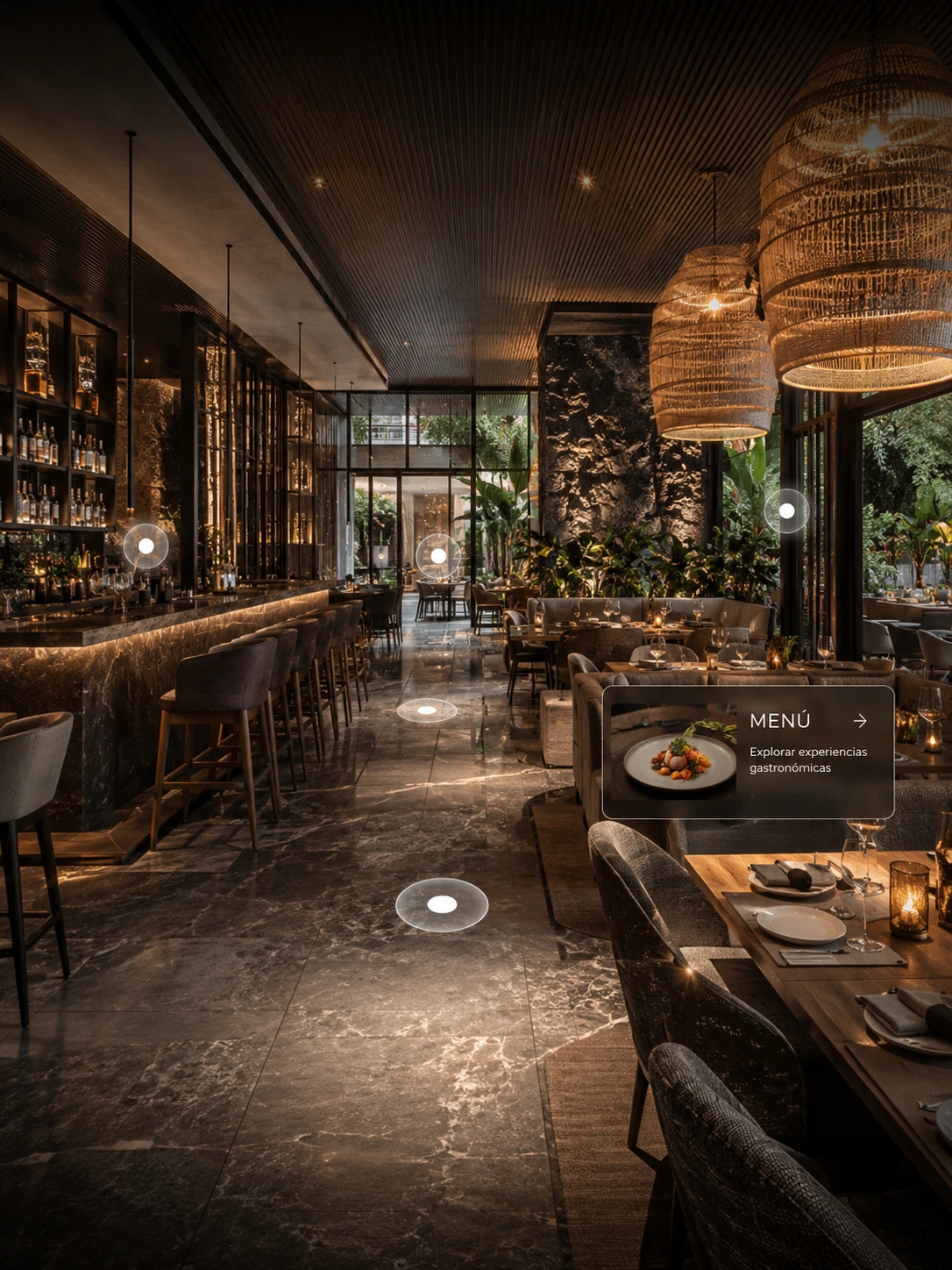
- It can include interactive points, forms, info cards, videos, maps, buttons or links.
- Not every project needs the same level of production: the scope depends on the goal.
A simple definition
A 360° virtual tour is a digital experience that lets you move through a space from a computer or phone. The person doesn't just see a photo: they can choose where to look, move between areas and understand the relationship between rooms, lounges, amenities or service zones.
Unlike an image gallery, the tour keeps the context. For a hotel, a clinic, a gallery or a property for sale, that context helps answer questions that would normally only come up at the visit: size, flow, lighting, privacy, access and the overall feel of the place.
Why it matters for physical spaces
It matters because the decision about a space is rarely made with a single image. A guest wants to imagine their stay, a patient wants to feel safe, a buyer wants to filter whether it's worth visiting, and a commercial director needs to explain the space without always relying on an in-person meeting.
Used well, a virtual tour doesn't replace human attention. It prepares it. It reduces uncertainty, organizes information and lets a sales conversation start with better questions.
Use cases applied to LUM360
- Hotels and venues that want to show rooms, halls, spa, beach or amenities before a booking or site inspection.
- Residential or premium properties that need to filter prospects before scheduling physical visits.
- Clinics and practices that want to convey trust without exposing sensitive areas.
- Galleries and museums that want to document an exhibition or create a remote experience.
- Restaurants and physical businesses that need to reinforce Google Maps, trust and local traffic.
- Yachts, showrooms or real estate developments that need to explain complex spaces with clarity.
The recommendation shouldn't start from a list of services, but from the goal of the space: sell, book, document, educate, filter prospects or build trust before the physical visit.
When it's worth it
- When the space is central to the decision to buy, book, rent or visit.
- When there are many repeated questions about layout, access, amenities or the condition of the place.
- When the sales team needs to share a consistent visual experience over web, WhatsApp, QR or a presentation.
When it needs a review first
- If the space isn't ready yet, it may be worth waiting, doing basic staging, or producing a partial version first.
- If there are private areas, visible data or people, you should define what's captured, what's hidden and what needs retouching.
- If the real goal is an emotional video campaign, the 360° tour may need to be complemented with audiovisual production rather than trying to solve everything alone.
This upfront review avoids paying for unnecessary elements and helps define a realistic scope. On sensitive projects, it's worth discussing permissions, visual privacy and final use before producing.
What affects price, scope or complexity
- The number of areas or 360 nodes needed to explain the space without making it heavy.
- The level of visual editing: basic correction, targeted cleanup or premium editing.
- The number of interactive points, info cards, buttons, forms or integrated resources.
- Logistics complexity: schedules, permits, open operation, setup, weather or multiple locations.
- Final use: web, Google Maps, sales team, booking platform, physical QR or a digital campaign.
The price shouldn't come from a generic formula. Two spaces of the same size can require very different levels of editing, logistics, interactivity and review.
How LUM360 approaches it
At LUM360 we start from the goal, not from selling more scenes. We ask what the tour needs to achieve and who it's being produced for.
Then we define which zones are essential, which can be left out and what level of interactivity makes sense. If the project requires it, we recommend scouting to anticipate permits, light, operation and privacy.
Delivery is designed for real commercial use: web, WhatsApp, Google Maps, presentations, QR or a sales team. The idea is that the tour isn't just beautiful, but useful for making decisions.
It's not about selling you more, but about helping you invest in what actually makes sense for your goals.
That's why the estimator asks about project type, goal, services, final use, urgency, editing and contact details. The idea is to recommend what's right for your goals, not to push a solution bigger than necessary.
Frequently asked questions
Is a 360° virtual tour the same as a video?
No. In a video the viewer watches a fixed sequence; in a virtual tour they can explore, change direction and move through areas of the space. The two formats can complement each other.
Can it be viewed on a phone?
Yes. A well-built tour should work on phone, tablet and desktop. On mobile it's important to manage file weight, navigation and buttons so the experience never feels confusing.
How many scenes do I need?
It depends on the scale and the goal. A small space can be explained with a few points, while hotels, galleries or developments usually require more nodes and interactivity.
Not sure what your space needs? Let's review it together.
Tell us about your project and we'll help you define the right scope: number of areas, level of editing, interactive points and the channels where the content needs to work.