An experienced broker in the Riviera Maya knows that time is the scarcest variable in the business. Setting up an in-person showing of a property in Tulum for a buyer flying in from Monterrey means confirming the property is available, arranging transportation, blocking out at least three hours on the calendar, and assuming the prospect arrives with enough willingness and information to make a decision. When all of that falls through—and it falls through often—the broker has spent half a workday on a lead who wasn't ready.
The 360 tour isn't a marketing tool for the broker. It's a lead qualification tool. Its most valuable job isn't to impress the prospect with an immersive experience—though it does—but to separate, before any personal contact, the buyer who has explored the space and is ready to move forward from the one who still doesn't know what they want. That separation is worth hours on the calendar and weeks of sales cycle.
The Riviera Maya Broker Market: Geography as an Obstacle
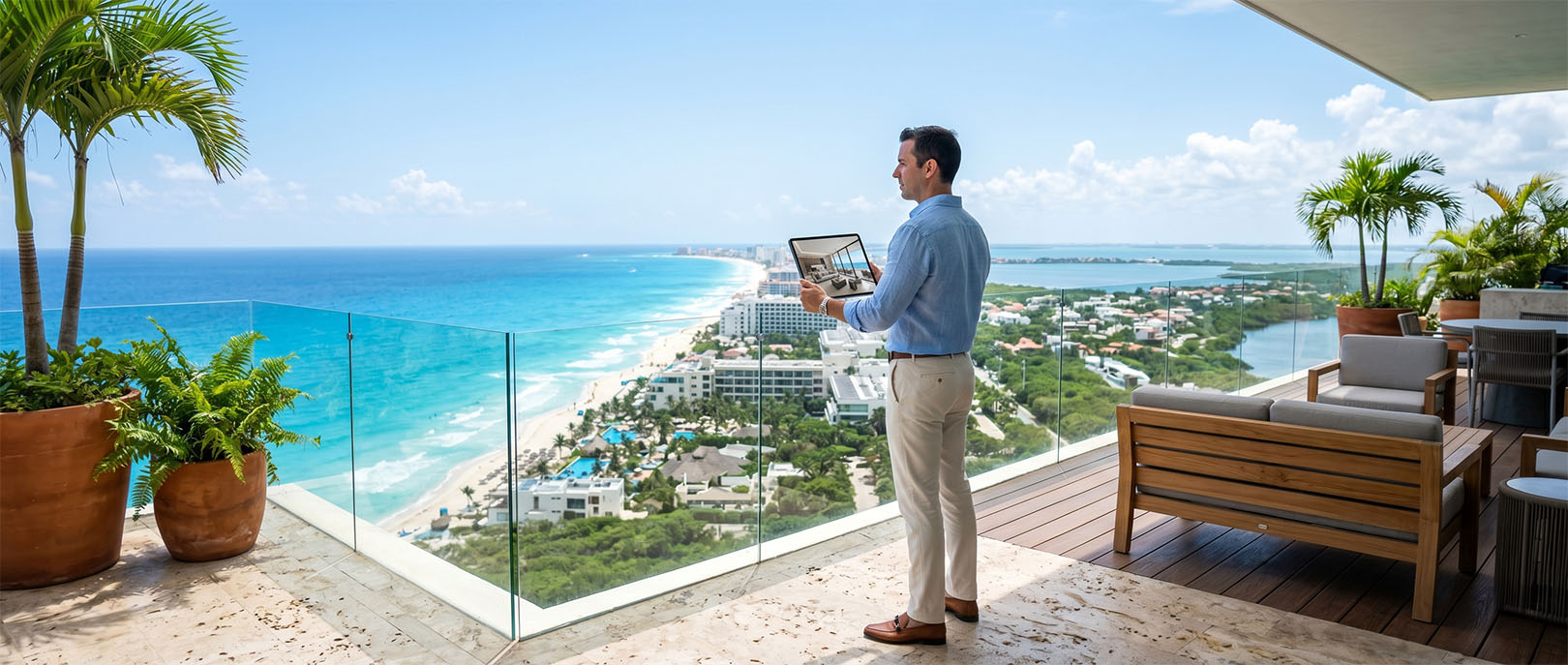
The Riviera Maya has an unusual market structure for Mexican real estate. Roughly 65% of real estate buyers in the area—peaking in Tulum, Playa del Carmen and the northern Riviera Maya—come from outside the state: Mexico City, Monterrey, Guadalajara and, in growing numbers, international buyers from the United States, Canada, Europe and Latin America. For that segment, an in-person visit means organizing a trip, and a trip means a level of commitment most prospects aren't ready to make in the early stages of the buying process.
This creates a structural problem for the broker: the local sales cycle—where the buyer can see the property in an afternoon and close within days—doesn't apply. The real cycle can run weeks or months, with multiple digital touchpoints before the first physical visit. And in that digital cycle, the quality of the information the broker can provide about the property determines whether the prospect moves forward or gets distracted by another option.
Most brokers in the market still work with conventional photographs, PDF floor plans and walkthrough videos shot on a phone. Those materials answer the question "What does the space look like?" but they don't answer the question the buyer really needs answered before committing to a trip: "Can I picture myself living here?" The 360 tour answers that second question in a way no other format can.
The International Buyer as a Market Reality
Foreign buyers of Riviera Maya property have specific characteristics that set them apart from local buyers, and the 360 tour addresses them directly. First, they operate from a different time zone and have less availability for calls during Mexican office hours. Second, they're more comfortable closing deals digitally—in many Anglo-Saxon and European markets, signing contracts remotely is standard practice. Third, they trust detailed visual evidence more than the broker's description, precisely because they can't immediately verify the information in person.
For this profile, the 360 tour works as a proxy for the in-person visit, lowering the barrier to entering the buying process. The buyer can explore the property at 11 p.m. from their apartment in Miami, in their pajamas, with no pressure on their time or schedule. If they like what they see, the next call with the broker already has a concrete starting point: "I saw the tour, I loved the north terrace, and I have a question about the kitchen finish." That conversation is qualitatively different from "tell me about the property."
Reduction in unnecessary in-person visits reported by Riviera Maya brokers who adopted the 360 tour as a required step before confirming any physical appointment. The prospect who arrives at the showing has already walked the space virtually—they come to confirm, not to explore.
Internal operating data reported by brokers affiliated with LUM360, Riviera Maya 2024–2025.
How the 360 Tour Pre-Qualifies the Prospect Before the First Call
The traditional workflow of a Riviera Maya real estate broker has a clear bottleneck: the first contact call, which on average lasts 20 to 40 minutes, is spent largely on the broker describing out loud what the prospect should be able to see. If at the end of that call the prospect concludes the property isn't what they expected, the broker has spent 30 minutes on a disqualification that should have happened in the first 5 minutes of exploring the tour.
The workflow with an integrated 360 tour flips this order. The prospect's first contact with the property is the tour—sent by WhatsApp, email or embedded directly in the digital listing—and the first call already assumes the prospect has explored the space. The broker can start the conversation at a much more advanced point in the decision cycle.
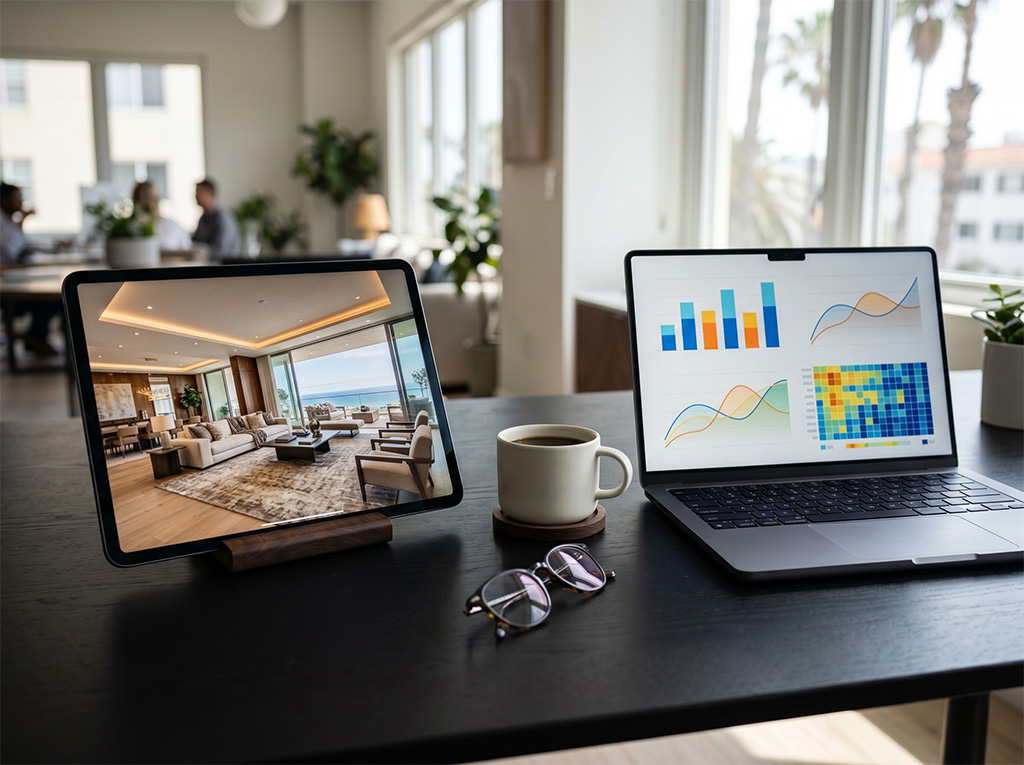
In addition, the time a prospect spends in the tour is a qualification signal in itself. A prospect who goes through the tour for 4 or 5 minutes, returns to specific sections and clicks on info hotspots is showing an active level of interest. One who pops in and out in 30 seconds probably wasn't a fit for the property's profile. With a tour connected to GA4, the broker can see this behavior before the call—the article on measuring virtual tours with GA4 and GTM explains how to set up this behavior tracking.
The Tour as the Centerpiece of the Remote Presentation
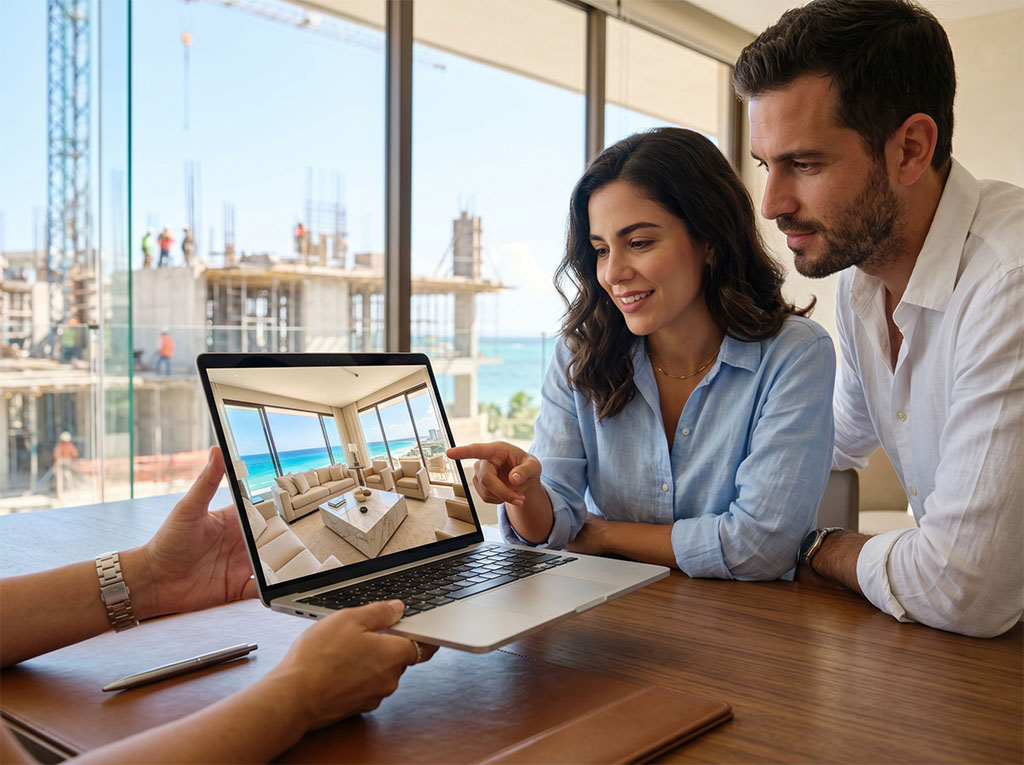
Beyond pre-qualification, the 360 tour has a specific role at the moment of the formal presentation: the video calls where the broker presents options to the prospect. On a Zoom call with a buyer in Toronto who is evaluating three properties in Tulum, the broker who can share their screen and navigate the tour in real time—pointing out specific features, opening hotspots, showing the interactive floor plan—is in a significantly different position from the broker sharing a PDF or a photo album.
In a remote presentation, the 360 tour does several things at once. First, it holds the prospect's attention longer than any static material—the interactivity of the tour is inherently more engaging than flipping through slides. Second, it lets the broker control the pace of the presentation: they can linger on the property's strengths, give the prospect time to explore, and steer the navigation toward the features they know matter to that specific buyer. Third, it raises the broker's professional standing—in a market where it's hard to tell brokers apart, the quality of the presentation materials is a proxy for the quality of service the buyer can expect.
Closing Without a Physical Visit: The Protocol for International Buyers
Among international buyers in the Riviera Maya, closing without a physical visit is increasingly common—especially in pre-construction sales, where the property isn't built yet and an in-person visit wouldn't add any information about the final product. The 360 tour is the core asset in this kind of deal, but it doesn't work alone.
The remote closing protocol that the region's most effective brokers have developed combines several elements in sequence:
- 360 tour sent as the first contact with the property. Not a photo gallery, not a YouTube video. The interactive tour, with hotspots that hold the key data: price, size, finishes, amenities and, if applicable, an estimated rental yield.
- Presentation video call with the tour navigated live. The broker shares their screen and walks through the tour with the buyer, answering questions in real time. The ideal length is 30 to 45 minutes—enough to cover the property in detail without losing the prospect's attention.
- Digital letter of intent and remote due diligence. Legal documentation, title search, purchase agreement—all manageable digitally with e-signature. A broker with remote-deal experience knows which documents to prepare and in what order to minimize friction.
- Physical visit after closing, for verification. In many pre-construction cases, the visit to the finished property is the buyer's first in-person contact with it—and it happens when the contract is already signed and the deposit paid. The tour served as a functional substitute for the decision-making visit.
For pre-construction sales specifically, the 360 tour can be combined with 3D renders and digital model walkthroughs when the property isn't built yet. The article on how to sell pre-construction developments with virtual tours covers this combination in detail.
The Tour Portfolio as a Sustainable Competitive Advantage
A broker who uses 360 tours for every property in their portfolio doesn't just sell each individual property better—they build a cumulative digital asset that works as a long-term differentiator in their market.
A tour portfolio has three compounding effects. The first is reputation: developers and owners looking for a broker for their properties prefer to work with someone who has the infrastructure to present them professionally from day one. The second is SEO: every tour published on the broker's website—with its own URL slug, its own meta description and its own indexable content—adds to the site's domain authority and its visibility in local searches. The third is operational efficiency: a broker with tours for all their properties can handle more leads at once without the quality of the presentation dropping, because the tour does the part of the work that used to require a physical presence or long calls.
The Real Workflow: Building the Tour Into Every Stage of the Sales Cycle
Putting the 360 tour into a broker's sales cycle doesn't mean changing the whole process—it means inserting the tour at the right points in the workflow that already exists. These are the four integration moments with the biggest impact:
Moment 1 — In the digital listing. The tour should be the lead element of the listing on real estate portals, your own website and WhatsApp Business listing cards. Not the fourth element after photos, video and floor plan—the first. A prospect who starts their evaluation with the tour reaches the rest of the information already carrying spatial context.
Moment 2 — As the first follow-up message. When a prospect makes an initial inquiry—through Instagram, a portal, WhatsApp or any other channel—the first reply should include the tour link before any long introductory text. A broker who answers "thanks for your interest, let me tell you about the property" before sharing the tour is reversing the order that works.
Moment 3 — In the presentation video call. The tour navigated on a shared screen is the backbone of the presentation. A broker with 3 properties to show a prospect can walk through all 3 in 45 minutes without leaving the video call. Without the tour, the same session would take 3 separate in-person visits.
Moment 4 — In the objections phase. When a buyer has doubts about a specific aspect of the property—"I wasn't clear on the size of the second bedroom" or "What's the view like from the balcony?"—the 360 tour is the immediate answer. The broker sends the link with navigation instructions ("go into the second bedroom and look toward the window") and the objection is resolved without scheduling another visit.
360 Tour Built Into the Sales Cycle
Lead Capture
- First contact
- Tour link + basic summary: price, m² and location.
- Goal
- Passive pre-qualification: the tour screens for real intent before you commit calendar time.
- Qualified signal
- 3 minutes or more in the tour + a click on the price or contact hotspot.
Active Contact
- First call
- “Which part of the tour raised the most questions for you?”
- Target length
- 15–20 minutes. The client has already seen the space; there's no need to describe it from scratch.
Formal Presentation
- Video call
- Tour navigated on a shared screen for 30–45 minutes.
- Materials
- Tour, hotspots, interactive floor plan and a comparison of options.
Closing
- Remote protocol
- Digital letter of intent → due diligence → contract.
- Physical visit
- Optional, or after closing: the tour replaced the decision-making visit.
A broker who doesn't yet have 360 tours for their portfolio doesn't have a marketing problem—they have a process problem. Competitors who do have them are responding faster, pre-qualifying better and closing with prospects who never made it to the call stage with the broker who has no tour. If you're evaluating how to implement this for your business, the virtual tour pricing guide for Cancún gives you the investment context you need to make the decision with real numbers.
Your next in-person visit should be a confirmation, not an exploration.
If your prospects arrive at showings without having seen the space beforehand, the tour is missing from your process. At LUM360, we produce 360 tours with hotspots for brokers and developers in the Riviera Maya, with 48-hour delivery and self-hosted source code. Let's talk about your current portfolio.