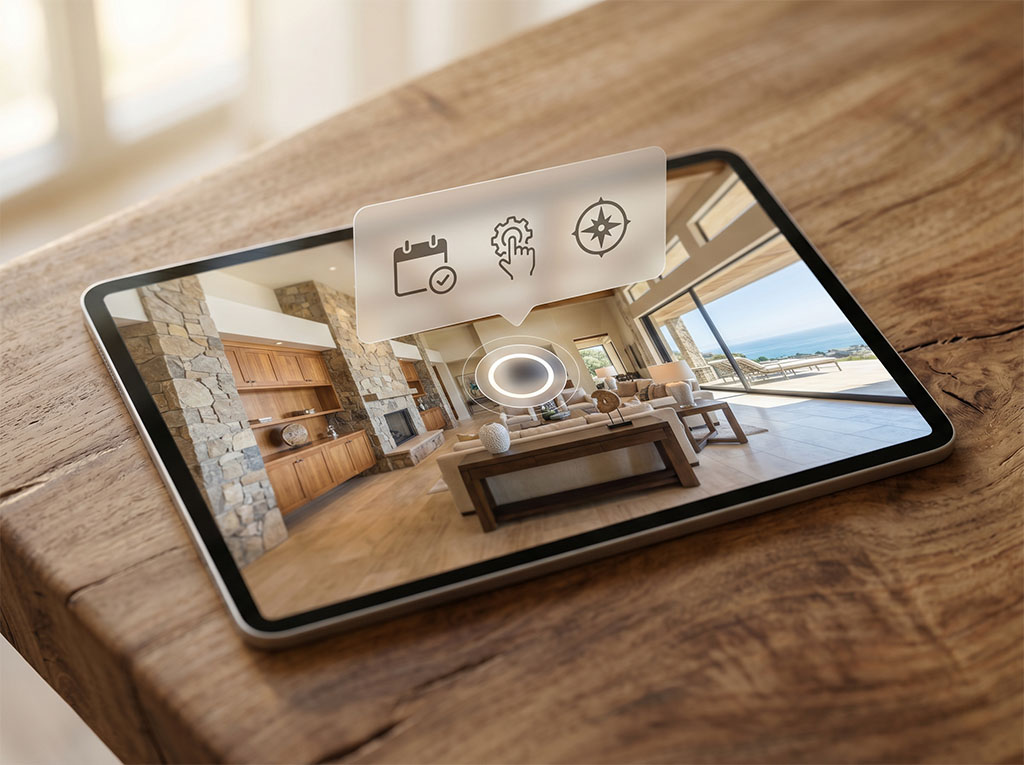
A 360 virtual gallery is a navigable representation of an exhibition or cultural space. It lets people move through the rooms, see artworks in their context and open relevant information without being at the venue.
- A 360 virtual gallery lets visitors walk through rooms or an installation from the web or a phone.
- It can include artwork labels, curatorial texts, contact buttons, videos or audio.
- It works for documentation, outreach, sales, education or remote access.
- It has to respect the curatorial narrative, image rights and visual clarity.
A simple definition
A 360 virtual gallery is a navigable representation of an exhibition or cultural space. It lets people move through the rooms, see artworks in their context and open relevant information without being at the venue.
It's not just uploading photos of artworks. The difference lies in preserving the relationship between the installation, architecture, lighting, pieces, texts and route. That spatial reading can be essential for a temporary exhibition, a private collection or a commercial show.
Why it matters for physical spaces
It matters because many exhibitions have a short life, while their documentary and commercial value can last much longer. A virtual gallery lets you share the show with collectors, press, remote audiences, institutions, students or an internal archive.
It can also support sales or the presentation of artwork, as long as the labels and calls to action are designed with care. The experience should feel curatorial, not like a cluttered catalog.
Use cases in LUM360's work
- Document a temporary exhibition before it comes down.
- Share a show with remote audiences, collectors or institutions.
- Integrate artwork labels with artist, medium, dimensions, year, availability or contact.
- Support openings, fairs, activations or cultural campaigns.
- Create a digital archive for a museum, gallery, foundation or private collection.
- Develop educational experiences with texts, audio, video or room-by-room navigation.
The recommendation shouldn't start from a list of services. It should start from what the space needs to do: sell, take bookings, document, educate, qualify prospects, or build trust before an in-person visit.
When it makes sense
- When the installation, the room and the context are part of the exhibition's value.
- When you want to extend reach beyond the in-person visit.
- When the gallery needs a tool for press, collectors, archive or sales.
When it needs a closer look
- If there is no authorization to show certain artworks, texts or images, that has to be settled beforehand.
- If the room lighting isn't favorable for capture, it's worth reviewing adjustments or scouting.
- If each artwork needs a lot of information, design clear labels so the space doesn't get cluttered.
This upfront review keeps you from paying for things you don't need and helps define a realistic scope. On sensitive projects, it's worth talking through permissions, visual privacy, and final use before production begins.
What drives price, scope, or complexity
- Number of rooms, nodes and featured artworks.
- Number of interactive labels, curatorial texts, detail photos or videos.
- Lighting conditions, reflections, glass or delicate pieces.
- Image rights, permissions, pricing and artwork availability.
- Final use: archive, sales, outreach, education, press or opening.
Price shouldn't come from a generic formula. Two spaces of the same size can call for very different levels of editing, logistics, interactivity, and review.
How LUM360 approaches it
At LUM360, we approach the virtual gallery as an editorial experience. First, we understand the intent of the show: to document, sell, educate, share or preserve.
Then we define the navigation route, the key rooms, the artworks that need a label and the level of interaction. Not everything needs the same depth.
We also take care of the mobile experience: short texts, clean labels and navigation that doesn't compete with the artworks.
The result should support the curation, not replace it.
That's why the Project Estimator asks about project type, goal, services, final use, urgency, editing, and contact details. The idea is to recommend what's right for your goals, not to push a bigger solution than you need.
Frequently asked questions
Can a virtual gallery help sell artwork?
It can support sales when it includes clear artwork labels, contact options and context. It doesn't replace the relationship with the collector, but it helps you present the work better.
Can I include prices?
Yes, if your strategy allows it. When pricing isn't public, you can use "request information" buttons instead.
What about image rights?
They should be reviewed beforehand. Some artworks, texts or reproductions may require specific authorization.
Document and share your exhibition with intention We'll review it with you.
If you want to document, share or turn an exhibition into an interactive digital experience, we can help you define the right format.