Boutique hotels in Cancún and the Riviera Maya face a well-known distribution paradox: the ones that invest the most in design, guest experience and brand differentiation are exactly the ones that depend the most on OTAs to get that differentiation discovered. Booking.com and Expedia charge a 15% to 25% commission on every booking they process, but what they really sell isn't visibility or distribution. They sell visual trust: the assurance that what guests will find at the destination matches what they saw on screen.
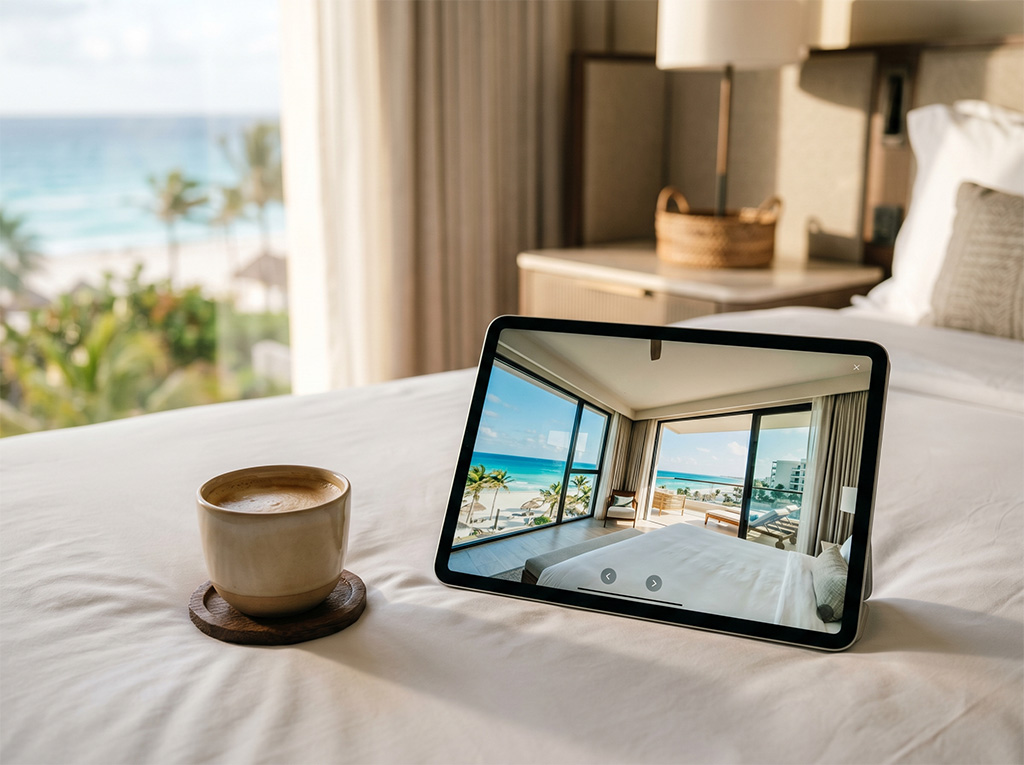
When a boutique hotel's website can't build that visual trust on its own — because conventional photos don't show the texture of the space, the atmosphere of the lobby or the real size of the rooms — guests move over to Booking. Not because of price or loyalty points, but because of certainty. A 360 tour solves exactly that problem and gives the hotel back the tool it needs to compete in its own direct channel.
The math of OTA commissions: what you're really paying
A boutique hotel in Tulum with 12 rooms, an average rate of $3,800 MXN per night and 70% occupancy sells roughly 3,066 room nights a year. If 60% of those bookings come through OTAs — a conservative share for a hotel with no active direct-channel strategy — the hotel processes 1,840 nights through outside platforms.
With an average commission of 18% and a rate of $3,800 MXN, the cost is $684 MXN per night booked. Over 1,840 nights, the hotel pays $1,258,560 MXN a year in commissions — more than a million pesos a year handed to platforms that bear no responsibility for the quality of the experience guests will find.
A 360 tour integrated into the hotel's website, with an active direct booking engine, costs between $35,000 and $65,000 MXN to produce in the Riviera Maya market for a hotel with 10 to 20 rooms. Annual hosting for the tour runs $3,000 to $6,000 MXN. If the tour helps shift 15% of OTA bookings to the direct channel — a conservative goal for the first year — the annual savings in commissions come to roughly $188,784 MXN. The payback period is between 3 and 5 months.
Average ROI in the first 90 days for Riviera Maya boutique hotels that integrated a 360 tour into their direct booking engine with active hotspots by room type. The return is measured against the reduction in OTA commissions attributable to the increase in direct bookings during that period.
Tracking data from boutique hotels in Cancún, Tulum and Playa del Carmen that worked with LUM360, 2024–2025.
Why Booking wins the reservation: the visual problem the hotel isn't solving
The decision process of a traveler looking for boutique lodging in the Riviera Maya follows a recognizable pattern. They discover the hotel on Instagram or Google, visit the website, look at the conventional photos and the descriptive text, then open Booking.com to "confirm" the details — and end up booking there because Booking has more photos, verified reviews, a clear cancellation policy and a checkout process they already know and trust.
The hotel lost the direct booking not because the guest prefers to pay more (the direct rate is usually the same or lower) but because the hotel's website didn't give them enough visual confidence to commit their card without going through a familiar intermediary. Conventional photos, however well produced, don't create the level of immersion guests need to feel they already know the space before they arrive.
A 360 tour changes that dynamic. A guest who spends 4 or 5 minutes virtually walking through the boutique hotel's lobby, rooms by type, pool, restaurant and terrace before booking arrives at the payment page with a level of confidence no photo can create. They've already decided. They know which room they want. They have specific questions about hours and breakfast — not doubts about whether the space will be what they expect. That state of readiness reduces friction in the direct booking checkout and raises the likelihood of completing the transaction without leaving the site.
Hotspots that convert: what to show in each scene of the hotel
A hotel 360 tour without hotspots is a passive visual experience. A tour with well-designed hotspots is an active conversion engine. The right hotspots in each scene turn exploring the space into a booking process with minimal friction.
In the lobby scene: a "Check availability" button that opens the direct booking engine, information about express check-in, the hotel's WhatsApp number for quick questions, and access to the restaurant menu.
In the room scenes (by type): a booking button specific to that room type, size in m², a description of the included amenities (minibar, air conditioning, safe, garden or ocean view), the included-breakfast policy, and the nightly rate with an implicit comparison to the OTA ("Direct rate: $3,500 MXN — No middleman commissions").
In the pool and outdoor areas scene: pool hours, the policy for children, spa access if applicable, and a link to the hotel's Instagram to see content from previous guests.
In the restaurant scene: a downloadable PDF menu, service hours, the reservation policy for non-guests, and the number of tables available for groups or private events.
Consistency between the tour and the booking engine is the most important technical factor. The booking hotspot should open the hotel's direct booking engine — Cloudbeds, Little Hotelier, ResNexus or any PMS with an embedded booking engine — without leaving the tour environment. If guests have to open a new tab to book, the conversion rate drops.
The technical integration: tour + booking engine + GA4
The technical setup of a tour built to maximize direct bookings has three components that need to work together:
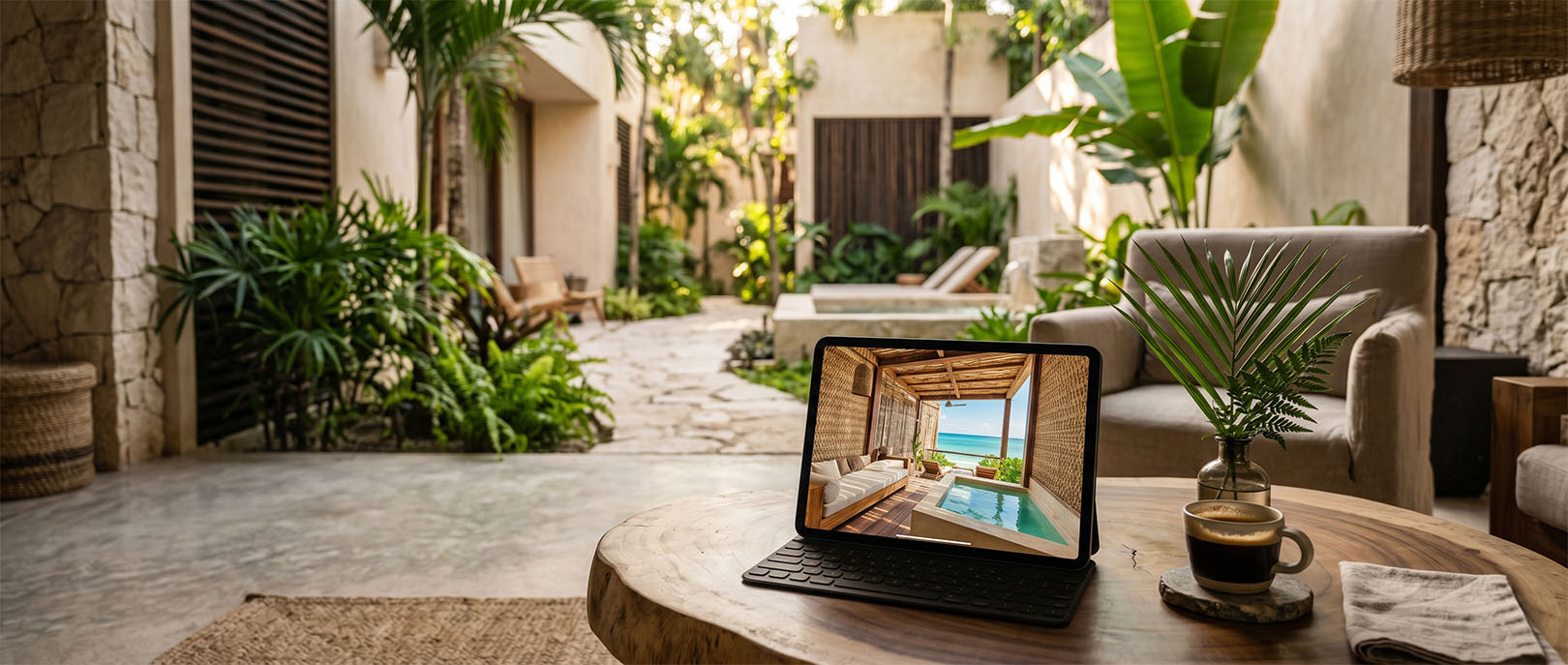
Component 1 — A self-hosted 360 tour on the hotel's own server. The tour lives on the hotel's domain, not on a third-party platform. That means tour visits are counted in the hotel's own analytics, hotspots can be updated without depending on any vendor, and the tour can be embedded on any page of the website without integration limits. Our article on self-hosted vs. SaaS: who controls your tour explains why this matters in the long run.
Component 2 — A direct booking engine linked from the hotspots. The booking hotspot in each room opens the hotel's booking engine with that room category preselected. This removes the friction of making guests start the booking process from scratch to find the room type they already saw in the tour.
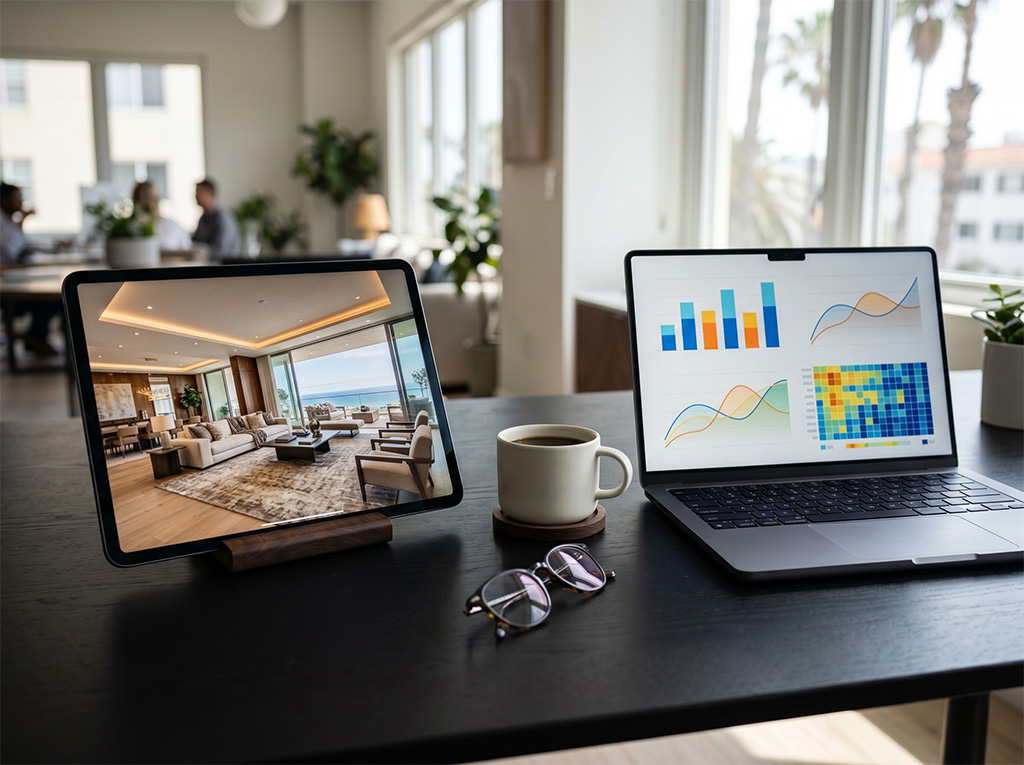
Component 3 — GA4 events to measure tour-attributed conversions. With GA4 set up correctly, the hotel can see how many guests who completed a direct booking went through the tour first, how long they spent in each scene, and which hotspot they clicked last before starting the booking process. That information lets you optimize the position and content of hotspots based on real behavior data, not assumptions. Our guide to measuring with GA4 and GTM covers the technical setup in detail.
The complementary strategy: use the tour on Google Maps and social media
The 360 tour on the hotel's website doesn't work in a vacuum — its impact multiplies when it's distributed properly across the touchpoints where guests make their lodging decisions.
Google Business Profile + Google Maps. The tour can be integrated directly into the hotel's Google Business Profile as "See inside," activating the virtual visit button on the Maps listing. This increases the time people spend on the hotel's listing, improves the prominence signals in the local algorithm and brings additional traffic from users who were evaluating the hotel from Maps. Our article on how to show up first on Google Maps explains the mechanism in detail.
Instagram and Meta Ads campaigns. 15- to 30-second clips pulled from the tour — rooms, pool, sunset from the terrace — work as native content in Reels and as creatives in retargeting campaigns. The audience that visited the tour but didn't book can be re-engaged with reminders specific to the room they explored the longest.
Post-inquiry email marketing. When someone messages the hotel on WhatsApp or fills out a form to check availability without booking, the first automated follow-up message can include the tour link with an invitation to explore the available rooms before deciding. This tactic shortens the decision cycle on inquiries that would otherwise be lost to inertia.
Direct booking stack · Integrated 360 tour · Boutique hotel
Tour on the website
- Hosting
- Self-hosted tour on the hotel's domain, with no reliance on outside platforms to show the experience.
- Hotspots
- Hotspots by room type connected to the booking engine with category preselection.
- Analytics
- GA4 events to measure tour sessions, time per scene and conversion to direct booking.
Multichannel distribution
- Google Maps
- Integration through Google Trusted Photographer to activate the “See inside” button on the hotel's listing.
- 15- to 30-second clips pulled from the tour for organic Reels and Meta Ads creatives.
- Email follow-up
- Tour link in the first message to inquiries without a confirmed booking, reducing visual friction before payment.
Expected result
- OTA shift
- Between 15% and 25% of bookings shifted to the direct channel in the first 90 days, depending on website maturity and existing traffic.
- First-quarter ROI
- Estimated return of 4.2× on the tour production investment, measured by the reduction in OTA commissions.
Every direct booking you lose costs between $525 and $875 MXN. A tour changes that.
We produce 360 tours for boutique hotels, integrated with your booking engine, certified for Google Maps and ready to distribute on social media. The analysis of your direct vs. OTA channel situation is free and comes with no obligation.