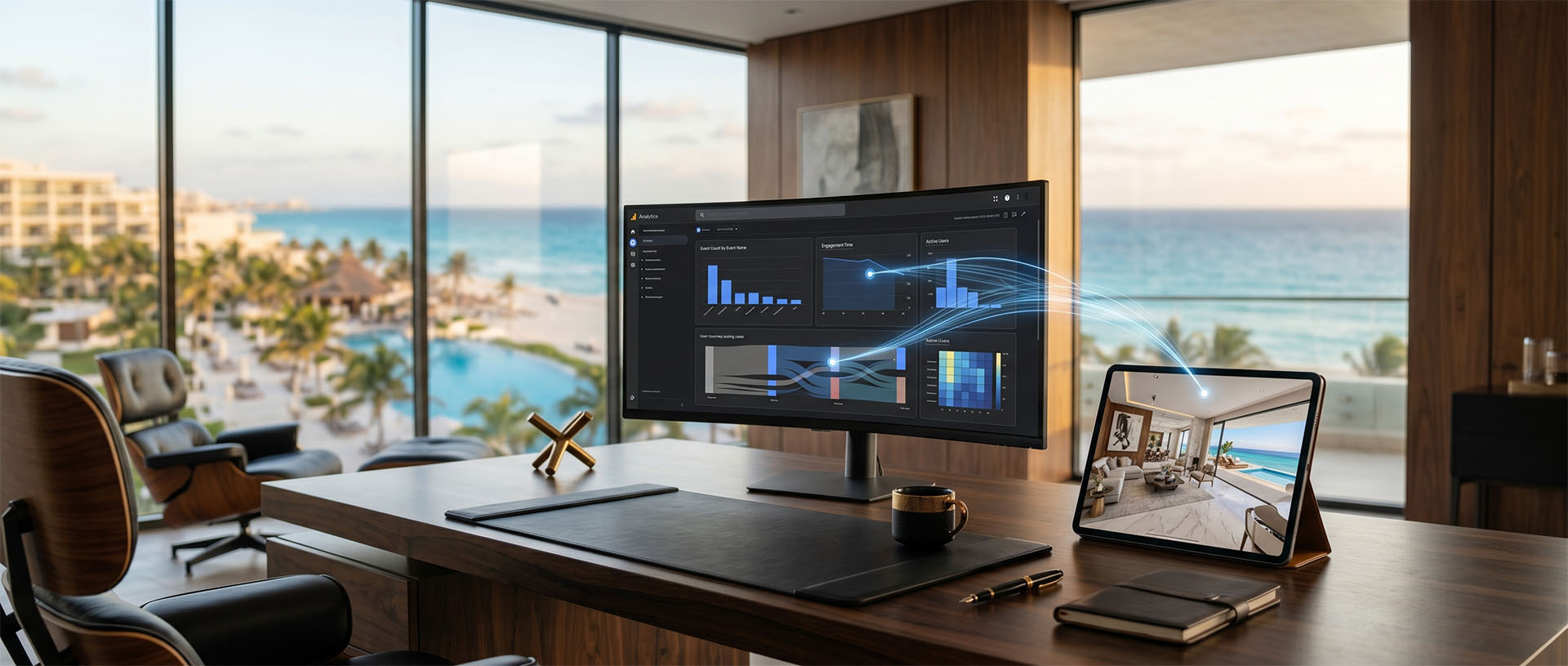
Learn which virtual-tour interactions are useful in Google Analytics and how to connect exploration with calls, forms, WhatsApp and bookings.
- Measure the tour as part of a customer journey, not as a standalone page view.
- Separate engagement signals from commercial outcomes.
- Use consistent event names and useful parameters.
- Interpret data together with device, traffic source and landing-page context.
Begin with the business question
Analytics is useful when it helps answer a decision. Do hotel guests who explore rooms reach the booking engine? Do international property buyers view the location scene before requesting information? Does a restaurant tour generate more route or reservation clicks from mobile visitors?
Write those questions before choosing events. The measurement model should remain small enough that a marketing or sales team can actually use it.
Engagement signals versus outcomes
Scene views, time engaged and hotspot clicks show how people use the experience. Forms, booking clicks, calls and WhatsApp actions show commercial progress. Both matter, but they should not be confused.
A visitor may explore several scenes and leave because the tour answered the question. Another may open one scene and immediately request a quote. Context is more useful than a single “engagement score.”
Parameters that improve analysis
- Tour or property identifier.
- Scene or area name.
- Hotspot category: navigation, information, media or conversion.
- Device class and traffic source already available in GA4.
- CTA destination such as booking, form, phone or WhatsApp.
Use controlled values rather than free text so reporting remains clean.
Reports a team can act on
- Most-viewed areas by tour and device.
- CTA clicks after tour engagement versus without engagement.
- Traffic sources that generate meaningful exploration.
- Mobile load or abandonment patterns.
- Property, room or venue areas associated with qualified inquiries.
What analytics cannot tell you alone
GA4 cannot explain intent perfectly, replace sales feedback or prove that one interaction caused a purchase. Consent choices, browser restrictions and cross-domain configurations also affect coverage.
Use analytics as one evidence source alongside lead quality, booking information, customer questions and operational feedback.
A practical LUM360 setup
We recommend a concise event taxonomy, documented parameters and a QA process across embedded and direct tour URLs. Measurement is connected to the website’s conversion actions so the report reflects the whole journey rather than an isolated media asset.
Frequently asked questions
Is time on the tour enough to measure success?
No. Time can indicate interest, confusion or simply an open tab. Combine it with scene behavior and meaningful next actions.
Can WhatsApp clicks be measured?
Yes. The click can be recorded as an event, although the conversation itself happens outside GA4.
Does analytics require consent?
Requirements depend on jurisdiction and implementation. LUM360 uses consent controls so optional analytics remain disabled until permission is granted.
Turn the idea into a useful digital experience.
Tell us about the space, audience and business goal. LUM360 can help define the right combination of web, visual production, analytics and immersive media.