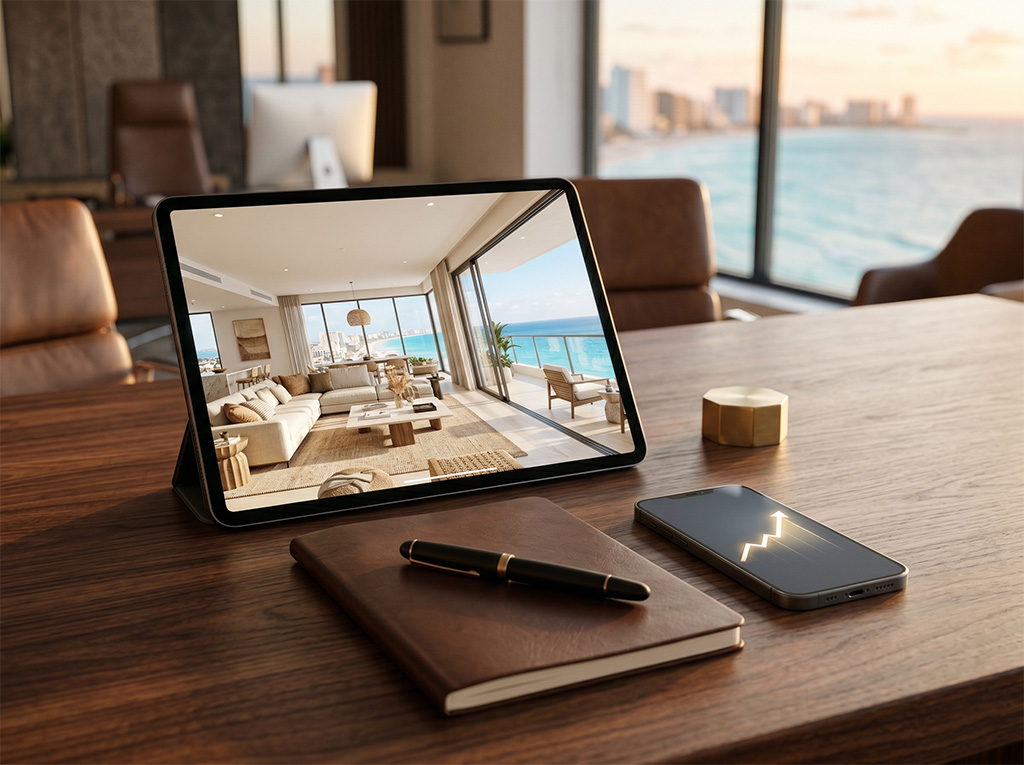
Local SEO is the work of optimizing the online presence of a physical business for searches with local intent. That can mean restaurants, clinics, hotels, galleries, showrooms, stores, professional services or any space that needs to attract visits and inquiries in a given area.
- Local SEO helps nearby people understand and find your business.
- Google Maps and your Google Business Profile are central pieces, but not the only ones.
- Accurate information, photos, virtual tours, reviews and your website all work together.
- Nobody can guarantee rankings; what you can improve are the signals of clarity and trust.
A simple definition
Local SEO is the work of optimizing the online presence of a physical business for searches with local intent. That can mean restaurants, clinics, hotels, galleries, showrooms, stores, professional services or any space that needs to attract visits and inquiries in a given area.
Google Maps is part of that ecosystem. For many users, the first impression doesn't happen on your website but on a listing with photos, reviews, hours, location, categories and call or directions buttons.
Why it matters for physical spaces
It matters because someone searching nearby is usually comparing options. Before calling or visiting, they check whether the business looks active, trustworthy, easy to find and aligned with what they need.
Visual content helps because it reduces uncertainty: it shows the entrance, the atmosphere, the facilities, the menu, the rooms, the exam rooms or the showroom. It doesn't promise you'll show up first; it helps people who have already found you decide with more confidence.
Use cases in LUM360's work
- Restaurants that need to show the atmosphere, menu, terrace, bar or experience before someone books a table.
- Clinics that want to convey trust, cleanliness, privacy and medical technology.
- Hotels and venues competing for bookings, events and site inspections.
- Galleries, museums and cultural spaces that want to show up better in searches for exhibitions or visits.
- Stores, showrooms and industrial businesses that need to explain their facilities and products.
- Businesses with multiple locations that need consistency across listings, website and visual content.
The recommendation shouldn't start from a list of services. It should start from what the space needs to do: sell, take bookings, document, educate, qualify prospects, or build trust before an in-person visit.
When it makes sense
- When your customers usually search on Google or Maps before visiting.
- When there's local competition and visual trust can set you apart.
- When your listing has little information, outdated photos or messaging that doesn't match your website.
When it needs a closer look
- If you expect immediate or guaranteed results, you'll want to adjust your expectations.
- If your business has no process for answering calls, WhatsApp messages or reviews, visibility may not turn into opportunities.
- If your basic information changes often, start by sorting out your hours, categories, services and location.
This upfront review keeps you from paying for things you don't need and helps define a realistic scope. On sensitive projects, it's worth talking through permissions, visual privacy, and final use before production begins.
What drives price, scope, or complexity
- Consistency of name, address, phone number, hours and categories.
- Quality and freshness of photos, tours and website content.
- Reviews, responses and signs of legitimate activity.
- Local relevance of your content: services, areas, questions and use cases.
- Tracking of calls, clicks, direction requests, forms or conversions where possible.
Price shouldn't come from a generic formula. Two spaces of the same size can call for very different levels of editing, logistics, interactivity, and review.
How LUM360 approaches it
At LUM360, we approach local SEO as a trust experience. We review what a person sees before deciding: the listing, photos, tour, website, copy, buttons and way to get in touch.
Then we prioritize actions that make sense: improving visual content, aligning services, creating useful pages, organizing links and tracking the events that matter.
We use conservative language because Google doesn't allow promising rankings. The strategy aims to make the business's presence clearer and more trustworthy.
When the physical space is a selling point, a 360 virtual tour and photography can reinforce that local decision.
That's why the Project Estimator asks about project type, goal, services, final use, urgency, editing, and contact details. The idea is to recommend what's right for your goals, not to push a bigger solution than you need.
Frequently asked questions
Does local SEO guarantee I'll show up first?
No. Nobody can guarantee rankings. What you can do is improve your information, content, relevance and trustworthiness so your business is clearer to both users and search engines.
Does a 360 virtual tour help local SEO?
It can improve the visual experience and build user trust. Its value grows when it's connected to your listing, your website and your calls to action.
What should I review first?
Basic information, categories, photos, reviews, links to your website, hours, services, and consistency between Google Maps and your website.
Recommended sources and references
These references help keep a conservative reading on SEO, Maps, and measurement topics.
Your local presence should help people decide, not just show up We'll review it with you.
If your business depends on visits, bookings or local calls, we can review how to connect Google Maps, visual content and your website into a clearer strategy.