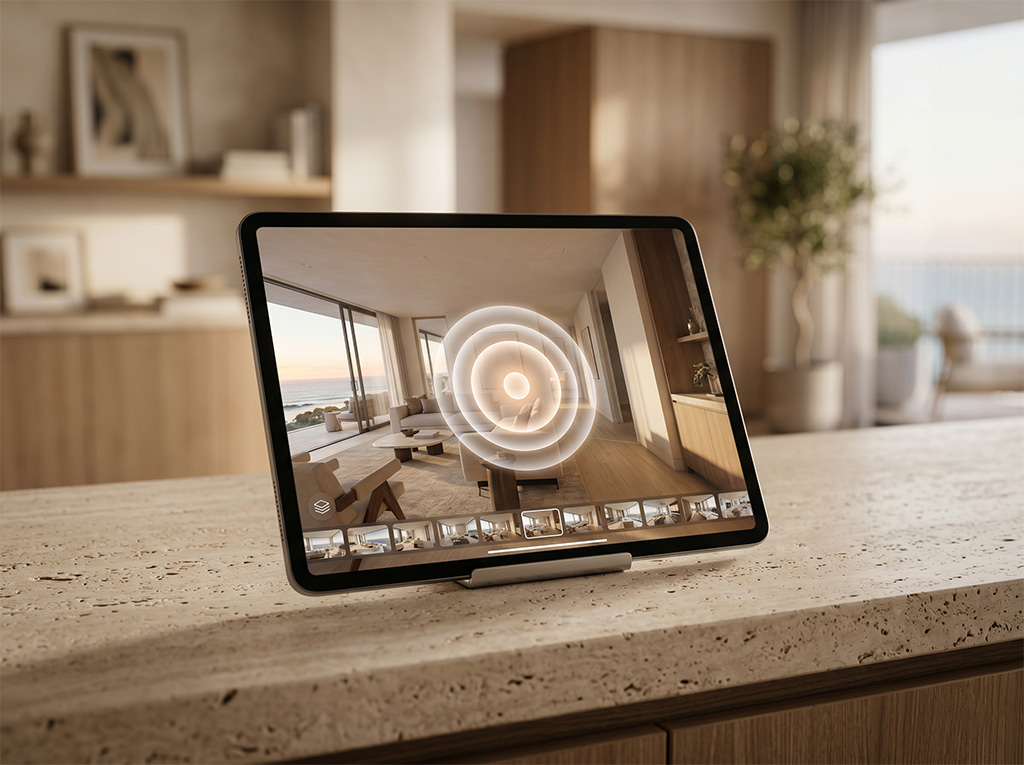
Scouting is a technical visit or review done ahead of time to understand how a virtual tour should be produced. Depending on the size and complexity of the project, it can happen on-site or with visual information from the client.
- Scouting is the review of the space that happens before production.
- It helps define nodes, schedules, light, permits, staging and visual risks.
- It isn't always required, but on complex projects it reduces uncertainty.
- It can prevent reshoots, poorly prepared areas and unclear expectations.
A simple definition
Scouting is a technical visit or review done ahead of time to understand how a virtual tour should be produced. Depending on the size and complexity of the project, it can happen on-site or with visual information from the client.
Its purpose isn't to complicate the process. It's to settle decisions before capture: which areas will be shown, where the nodes will go, which times have the best light, which permits are required, and what needs to be prepared or hidden.
Why it matters for physical spaces
In a 360 tour, the camera records everything around it. That means production can't be improvised the way a tightly framed photo can. A reflection, a document, an area in use or a time slot with poor light can affect several scenes.
Scouting matters most when the tour will have long-term commercial use or when the space has operational constraints: clinics, hotels, restaurants, museums, marinas, developments, offices or venues.
Use cases in LUM360's work
- Hotels and venues where rooms, ballrooms, amenities and operations have to be coordinated.
- Clinics with sensitive areas, privacy concerns, and patient or staff schedules.
- Galleries and museums with installations, artwork lighting and gallery flow.
- Yachts, where weather, the marina, permits and reflections affect the capture.
- Real estate developments with a showroom, construction, renders or sales materials.
- Businesses that can only be shot after hours or during slow periods.
The recommendation shouldn't start from a list of services. It should start from what the space needs to do: sell, take bookings, document, educate, qualify prospects, or build trust before an in-person visit.
When it makes sense
- When there are multiple areas, permits, schedules or decision-makers.
- When privacy or visual presentation is critical.
- When a bad capture would mean rescheduling, shutting down operations or missing an important window.
When it needs a closer look
- If the space is small, ready to shoot and the scope is simple, a remote review may be enough.
- If the budget is limited, you can do a lightweight pre-production with photos, video and a checklist.
- If the layout is still changing, it's best to wait for a more stable version.
This upfront review keeps you from paying for things you don't need and helps define a realistic scope. On sensitive projects, it's worth talking through permissions, visual privacy, and final use before production begins.
What drives price, scope, or complexity
- Size and complexity of the space.
- Operating hours and whether you need to shoot without the public present.
- Natural light, reflections, glass, outdoor areas or weather.
- Internal permissions, security, access, parking or restrictions.
- Number of stakeholders who need to approve areas and final use.
Price shouldn't come from a generic formula. Two spaces of the same size can call for very different levels of editing, logistics, interactivity, and review.
How LUM360 approaches it
At LUM360, we use scouting to turn a general idea into a concrete plan. We review areas, priorities, navigation routes and capture conditions.
We also identify where it makes sense to prepare, remove, clean, mark or hide information. This protects privacy and reduces rework.
After scouting, the scope is usually much clearer: required nodes, editing level, hotspots, schedules and deliverables.
When formal scouting isn't needed, we say so. The idea is to use it when it improves production and the quote.
That's why the Project Estimator asks about project type, goal, services, final use, urgency, editing, and contact details. The idea is to recommend what's right for your goals, not to push a bigger solution than you need.
Frequently asked questions
Does scouting always cost extra?
It depends on the project and on whether it's on-site or remote. On large projects, it's usually treated as a key part of planning.
What should I prepare for a remote scouting session?
Current photos or videos, a floor plan if you have one, a list of areas, time restrictions, and examples of what you want to achieve.
Can the quote change after scouting?
Yes, either way: up or down, as the scope gets adjusted. That's exactly the point: it lets us quote more accurately before we produce.
A great tour starts before the camera turns on We'll review it with you.
If your project has complex schedules, an open operation, sensitive areas or multiple locations, scouting can help you get a more accurate quote and a smoother production.