A landing page often fits when an audience arrives for a specific offer and needs to take one next step. A multipage website helps when different services, audiences, or questions need their own space. The choice depends on what visitors need to accomplish and what the business can maintain.
The difference is not simply a page count. A landing page can sit within a larger website, and a small website can serve a straightforward offer well. Start with visitor needs before deciding on a menu, a section count, or a platform.
1. Identify the decision you want to support
Describe who is arriving, what they already know, and what they need to check. Someone clicking an ad for a workshop already has a topic in mind. Someone looking for a maintenance provider may need to compare services, coverage, process, and experience before making contact. Using the same structure for both can add unnecessary steps or leave questions unanswered.
Write the main action as a verb: check availability, request a quote, book a session, or browse a catalog. Then list the information needed to take that action. If several equally important actions serve different audiences, that is a reason to consider separate navigation paths.
2. When a landing page may be enough
A focused page can work for a campaign, launch, or offer with a small number of steps. It should explain the offer, who it is for, what is included, relevant conditions, and how to proceed. Having one primary goal does not require removing legitimate questions or hiding contact information.

Fictional example: a studio offers a pottery workshop on a specific date. Visitors need the time, location, included materials, requirements, and availability. A dedicated page can gather those answers and lead to a registration request. If the studio also sells pottery, runs ongoing courses, and rents out the venue, those needs may deserve additional pages.
The landing page needs an operating process behind it. Define who responds, how a booking is confirmed, and what happens when places sell out. An attractive form does not solve an inbox nobody checks. The structure should match the team’s actual ability to handle the action it asks visitors to take.
3. When a multipage website makes more sense
When a business offers distinct services, each may need its own explanation, scope, examples, and questions. Separating them can let visitors arrive directly at the service they need and find useful links to related information. The separation should reflect real content differences.
Fictional example: a company handles preventive maintenance, repairs, and installation projects. Customers need different information to request each service. A homepage can provide direction, while service pages explain those differences and share a contact route. Copying the same text and swapping the service name would leave the actual need unresolved.
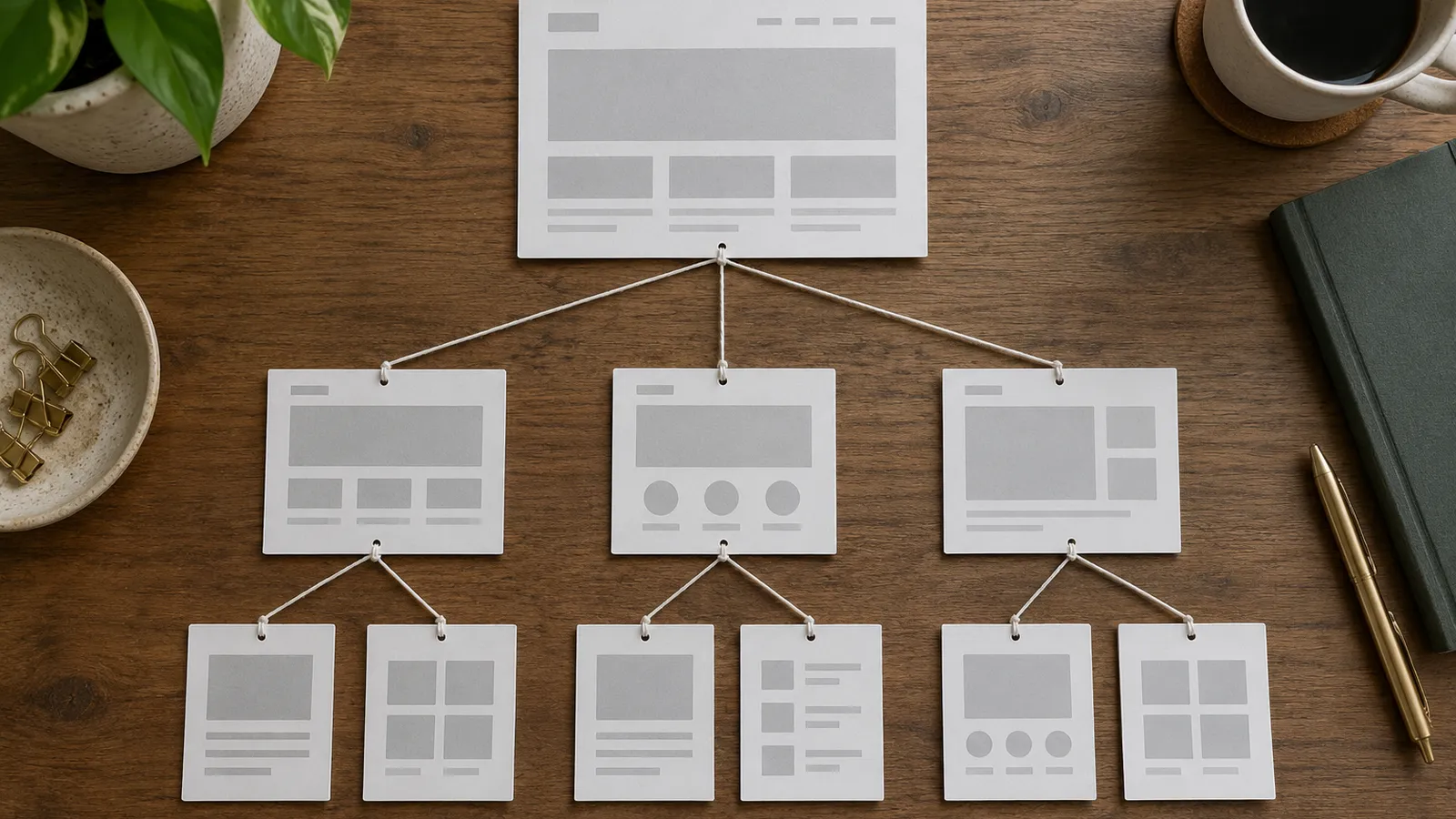
Fictional catalog example: a business with products that have dimensions, variants, and technical data needs a clear way to browse and maintain those details. This does not automatically require online payments. It can start with a catalog and quote requests if that matches its sales process. Online purchasing is a separate decision.
4. Use this matrix as a starting point
| Question | Signs a landing page may fit | Signs a multipage site may fit |
|---|---|---|
| What do you offer? | One defined offer | Several genuinely different lines |
| Who is arriving? | One audience in a specific context | Audiences with different needs |
| What must they review? | A short sequence of information | Services, resources, or products needing their own detail |
| How is it updated? | A campaign or defined date | Content that changes by section |
| What happens next? | One main action | Different paths depending on the need |
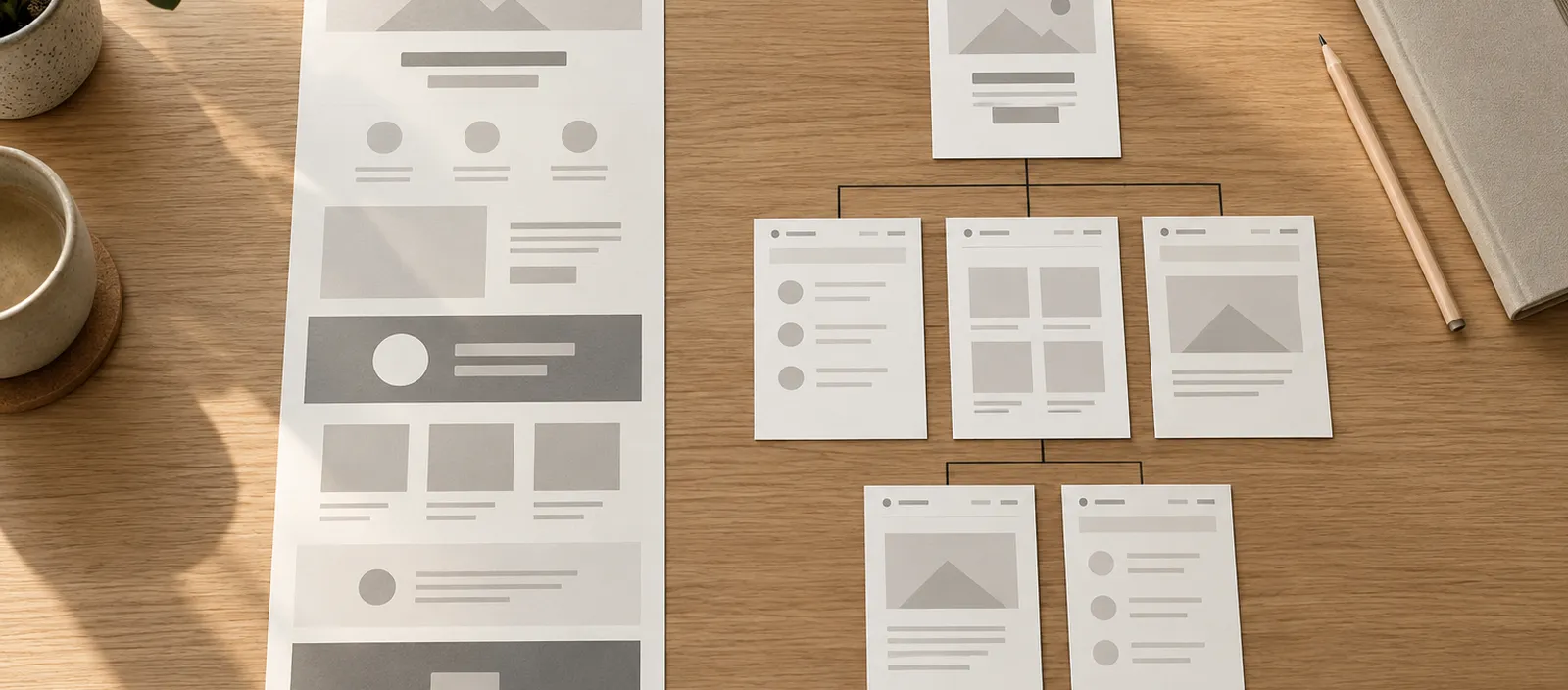
This is not an automatic score. If your answers are mixed, you may need a small website with a dedicated campaign landing page. Sketch both options as content blocks and ask where a visitor would find the answer they need. That exercise is more useful than comparing two sales labels.
5. Consider search, accessibility, and measurement
More pages do not guarantee more traffic. Each URL should earn its place with useful, distinct information. Avoid making near-identical variations to collect searches or repeating place names without meaningful local content. Google’s guidance prioritizes content for people, and its spam policies cover keyword stuffing and doorway abuse.
Whichever structure you choose, use clear page titles, logical headings, and understandable links. The semantic structure described by W3C helps people navigate and orient themselves. A long page still needs recognizable sections; a larger website needs a menu that makes sense to someone unfamiliar with the company.
Decide what to observe before launching: received inquiries, completed forms, or product inquiries, as appropriate. Separate a contact click from an inquiry actually received and a confirmed sale. Use measurement that fits the website’s privacy setup, and document what the data can and cannot show.
6. Expand when there is a clear need
You can start with a small structure if it serves the current visitor journey well. Keep control of the domain, organize the content, and agree on who can expand it. Before adding a section, identify the new question it will answer, who will write it, and who will keep its information current.

If you already have a website, inventory its pages and links before replacing it. Restructuring can affect URLs receiving visits or external links. Plan to preserve useful routes and review any necessary redirects with the technical owner. Avoid deleting pages simply to fit everything into a landing page.
Complete the editable website structure worksheet, then use the website brief generator to explain your choice to a provider. Bring your open questions. A professional proposal should show how the structure addresses those needs and what content it requires.
Frequently asked questions
Can a landing page appear in Google?
It can, if it is crawlable, indexable, and useful for the search. Calling a page a landing page brings no guarantee, and having more pages brings no automatic advantage. If a URL is missing from search, check publishing and indexing before redesigning.
Can I use both?
Yes. A website can present the business and its services while a landing page explains a specific offer. Avoid duplicating the same content without a purpose, and keep clear connections for visitors who need more context.
Sources
Reviewed and checked on November 1, 2026.
- (n.d.). Creating Helpful, Reliable, People-First Content. Google Search Central. Retrieved November 1, 2026, from https://developers.google.com/search/docs/fundamentals/creating-helpful-content
- (n.d.). Search Engine Optimization Starter Guide. Google Search Central. Retrieved November 1, 2026, from https://developers.google.com/search/docs/fundamentals/seo-starter-guide
- (n.d.). Spam Policies for Google Web Search. Google Search Central. Retrieved November 1, 2026, from https://developers.google.com/search/docs/essentials/spam-policies
- (n.d.). Page Structure Tutorial. Web Accessibility Initiative. Retrieved November 1, 2026, from https://www.w3.org/WAI/tutorials/page-structure/