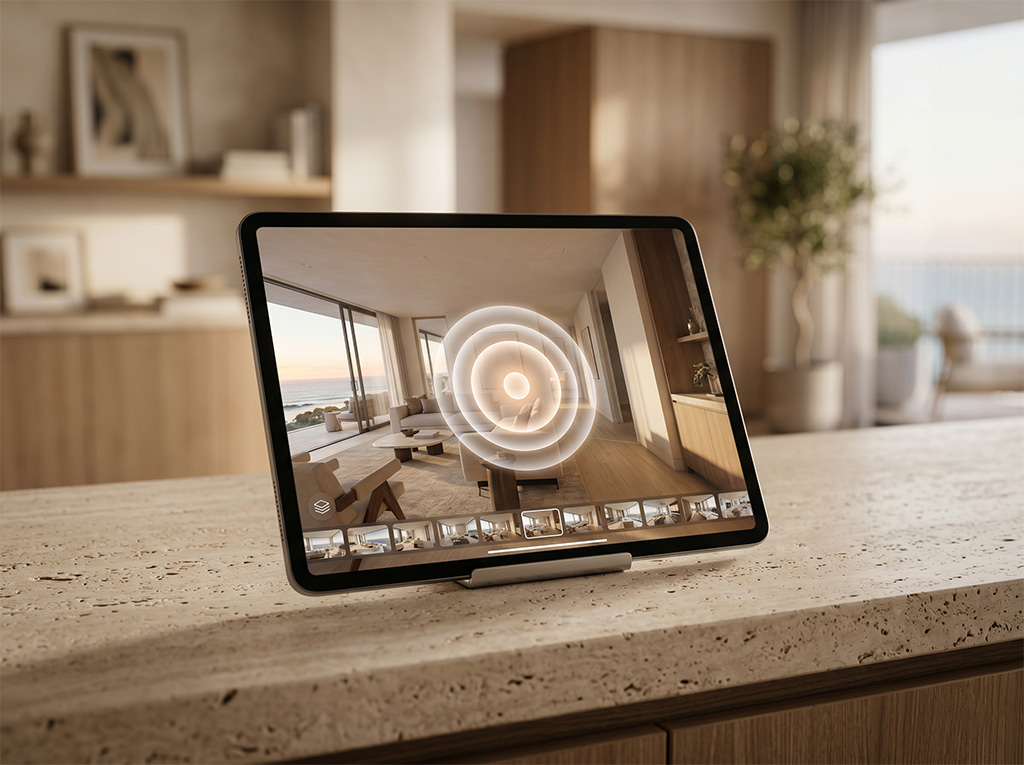
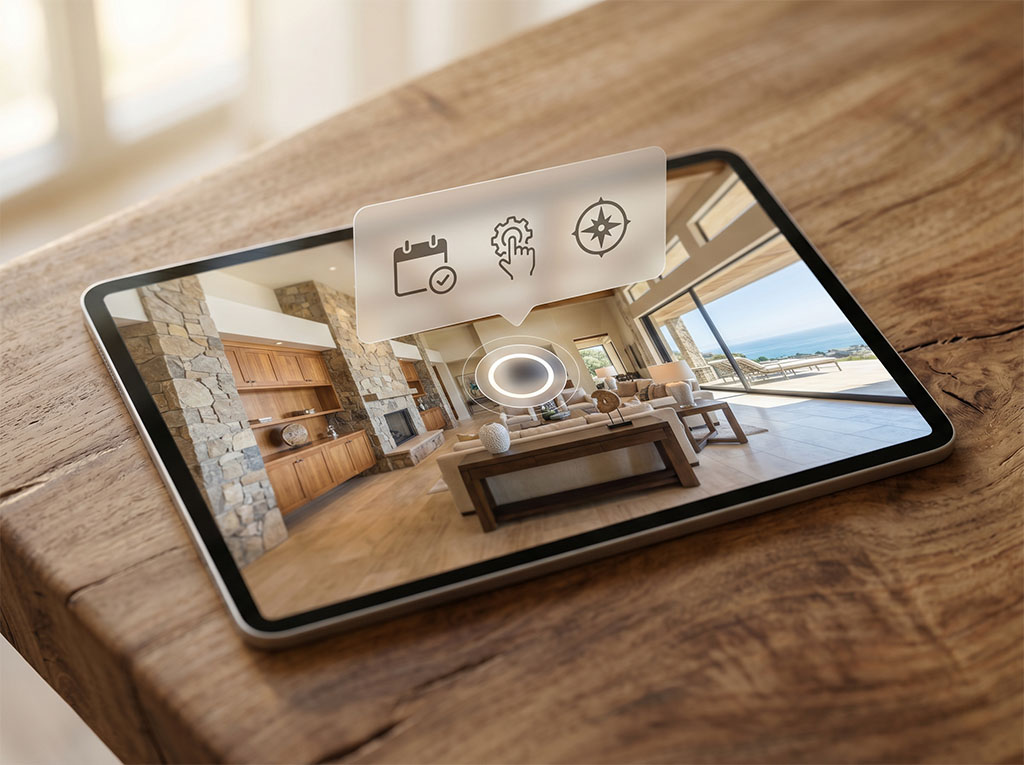
The term 3D virtual tour is usually used for experiences that reconstruct or interpret a space with a three-dimensional layer. There may be a scale-model-style view, floor-plan navigation or a more technical reading of the layout.
- A 360 tour is built from real panoramas connected to one another.
- A 3D virtual tour can include a spatial model, a dollhouse view or navigation with more structured geometry.
- 3D can help convey volume; 360 usually stands out for realism, atmosphere and visual detail.
- The decision should take into account goal, platform, editing, budget and maintenance.
A simple definition
The term 3D virtual tour is usually used for experiences that reconstruct or interpret a space with a three-dimensional layer. There may be a scale-model-style view, floor-plan navigation or a more technical reading of the layout.
A 360 tour, on the other hand, relies on spherical images captured from real vantage points. Viewers look around as if they were standing in each area. That's why it usually feels more photographic, direct and close to the real experience of the space.
Why it matters for physical spaces
The difference matters because each format solves a different problem. If you need a buyer to understand layout, volume and how areas relate, a 3D component can add value. If you need to convey trust, real condition, décor, light, amenities or atmosphere, 360 is usually more natural.
In commercial spaces, hotels, clinics, galleries and premium properties, the best solution is often not picking a technical label, but designing an experience that combines what's needed without inflating the scope.
Use cases in LUM360's work
- A 360 tour to show rooms, lounges, exam rooms, galleries, amenities or operational spaces realistically.
- A 3D tour when layout, floor plans or volume are central to the decision.
- Real estate developments that need to explain a model unit, showroom, renders or masterplan.
- Museums and galleries where 360 preserves the installation and curatorial context.
- Clinics where realism has to be balanced with visual privacy.
- Hotels and venues where the sale depends on imagining use, setup and experience.
The recommendation shouldn't start from a list of services. It should start from what the space needs to do: sell, take bookings, document, educate, qualify prospects, or build trust before an in-person visit.
When it makes sense
- 360 fits when the space already exists and its real appearance is a commercial asset.
- 3D fits when understanding volume or the floor plan matters more than photographic detail.
- A mix fits when the tour has to explain both experience and structure.
When it needs a closer look
- If the space changes often, review how the material will be maintained and updated.
- If you're looking for unrealistic effects, renders or visual promises that don't exist, it must be clear what is real capture and what is digital integration.
- If the budget is limited, a well-focused 360 tour may be better than a complex 3D experience that isn't very useful.
This upfront review keeps you from paying for things you don't need and helps define a realistic scope. On sensitive projects, it's worth talking through permissions, visual privacy, and final use before production begins.
What drives price, scope, or complexity
- The level of detail the user needs to make a decision.
- The actual condition of the space and whether it needs visual editing before publishing.
- Whether you need floor plans, fact sheets, buttons, videos or sales materials built in.
- The platform where the experience will live and its compatibility with phones.
- How often the content will be updated.
Price shouldn't come from a generic formula. Two spaces of the same size can call for very different levels of editing, logistics, interactivity, and review.
How LUM360 approaches it
At LUM360, we don't start from technology trends. We look at what the content needs to do: build trust, explain layout, support sales, document or guide a remote visit.
With that in mind, we recommend the right format. For many projects, a 360 tour with good editing, clear navigation and interactive hotspots outperforms a more complex solution the user doesn't need.
When a 3D component adds clarity, we integrate it with a simple narrative: so the user understands faster, not gets lost in technical layers.
Our recommendation always looks for a balance between visual impact, accuracy, cost and real-world use.
That's why the Project Estimator asks about project type, goal, services, final use, urgency, editing, and contact details. The idea is to recommend what's right for your goals, not to push a bigger solution than you need.
Frequently asked questions
Is a 3D tour always better than a 360 tour?
No. They're different. 3D can explain volume, while 360 usually shows the visual reality of the space better. It depends on your goal.
Can I integrate renders into a 360 tour?
Yes, as long as it's clear what is real content and what is supporting material. This is common in pre-construction, showrooms and developments.
Which option is more affordable?
It depends on the scope. In many cases, a well-produced 360 tour is a more efficient way in to show an existing space.
The right format depends on the goal We'll review it with you.
Tell us whether you need to sell, document, book, train or present a space. From there, we'll determine whether 360, 3D, video, photography or a light combination makes sense.