In Cancún and the Riviera Maya, there is an unusual concentration of good venues and businesses. That's no exaggeration: the combination of high-spending international tourism, a growing dining culture and fierce competition among owners produces a level of culinary quality that would be hard to sustain in any other market in the country. The problem, for that very reason, isn't having a good venue. It's that the diner choosing where to eat tonight has ten other good options in front of them.
In that context, the reservation isn't won by the venue with the best menu—the diner hasn't tried any of them yet. It's won by the one that manages, before the diner leaves home, to claim a place in their imagination. Atmosphere sells before food does. And the only tool that can sell atmosphere with the fidelity and immersion today's diner needs is the 360 virtual tour. In that sense, virtual tours for venues and businesses—especially a 360 tour of a Cancún venue when the audience is comparing tourist options—help the atmosphere come across clearly before booking.
The Reservation Decision No Longer Happens at the Venue
Diner behavior has changed structurally over the past five years. It used to be that the decision of where to eat could be made while walking down a street, glancing at menus in doorways or following a recommendation from someone passing by. Today, and especially in tourist destinations like Cancún where diners often don't know the area, the decision happens on the phone, many hours before arriving at the venue. If you're wondering how to increase reservations at a Cancún venue, start by optimizing that pre-visit experience with immersive materials.
The process follows a fairly consistent sequence: a search on Google Maps or social media, a look at photos and ratings, a read through a few reviews and, for the most discerning diners, a visit to the website or extra content before deciding. At every point in that sequence, the venue competes with other establishments that also have photos, also have ratings and also have reviews. At that point, a virtual tour service for venues and businesses offers a clear competitive advantage.
What most venues and businesses lack is something that lets the diner feel inside the place before booking. That gap—between looking at photos and experiencing the space—is exactly where the 360 tour operates. It doesn't replace the venue or the real experience. It offers something more specific and more valuable at the moment of decision: the chance to walk through the dining room, turn toward the terrace, see how close the tables are to the bar, sense whether the space is intimate or lively, and mentally choose where you'd want to sit.
increase in direct reservations is reported by venues and businesses that integrate a 360 virtual tour into their Google Business Profile and website, compared with similar establishments without this asset.
Source: Google Business Insights 2024 · Data from venues and businesses with a verified profile in Cancún and the Riviera Maya.
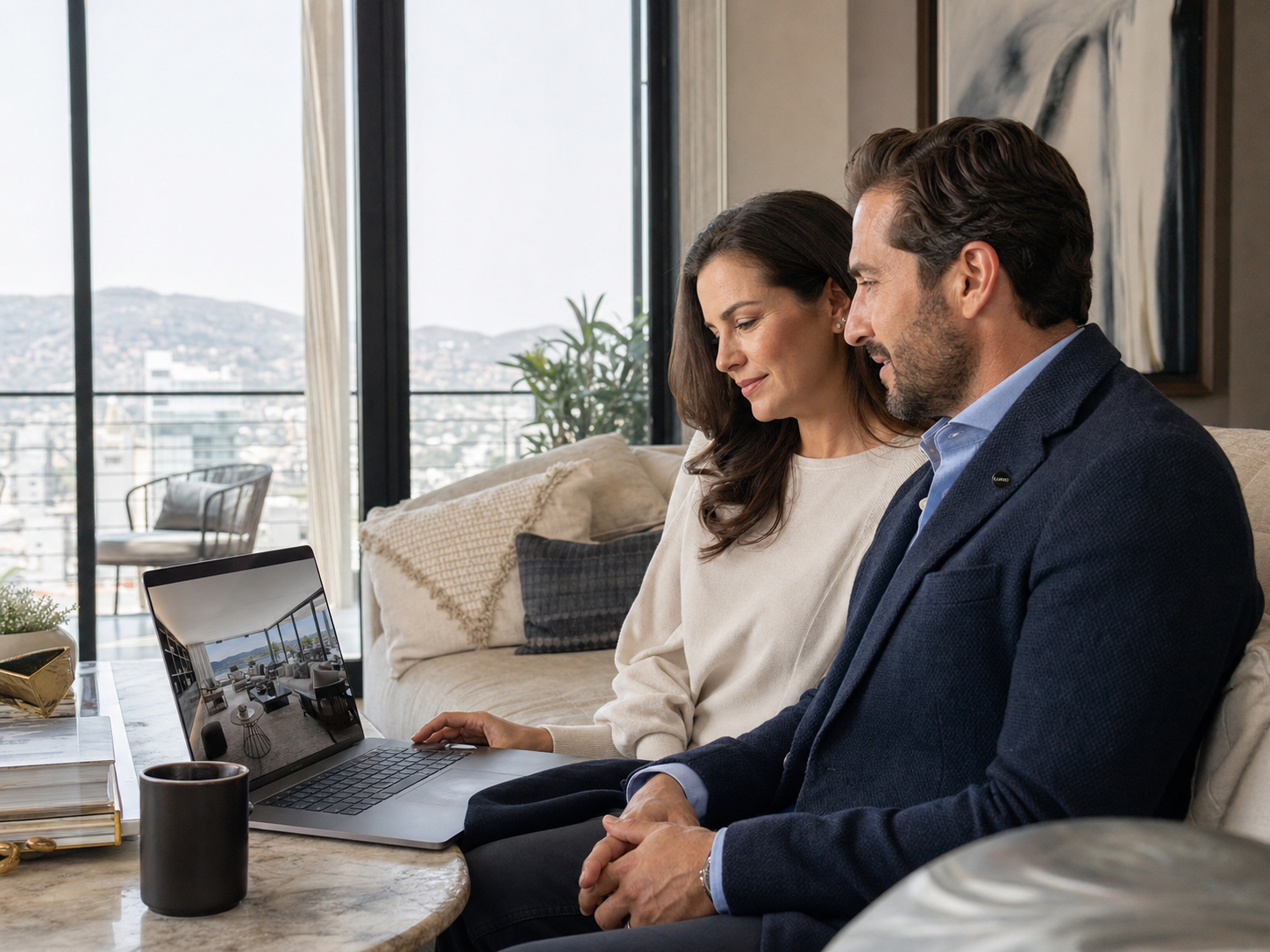
Why Atmosphere Is the Real Product in Luxury Dining
There's an important distinction between a venue that sells food and a venue that sells an experience. The first competes on the quality and price of its dishes. The second competes on something much harder to replicate: the sum of light, sound, design, service and atmosphere that produces a specific feeling the diner wants to repeat or give as a gift.
In the Hotel Zone of Cancún, most establishments that charge more than 800 pesos per person fall into the second group. Their pitch isn't "the best Mediterranean cuisine in the city"—though that too—but "a night that's worth the price." And that pitch is, fundamentally, visual and spatial before it's culinary. A diner who books a venue at that level does so with an image in their head of how the night will go. The venue that puts that image in their head before they book with the competition wins the night, even before cooking a single dish.
A diner doesn't choose a luxury venue for the menu. They choose it for the version of themselves they imagine sitting in that space.
Dish photography is necessary but not enough for that job. Atmosphere shots—taken from angles carefully chosen by a photographer—show the space at its best but break it into fragments. The diner sees one image of the bar, another of the terrace, another of the private dining room, and can't piece them together into a coherent spatial experience. The 360 tour solves exactly that: it gives the diner the ability to move through the space and understand its dimensions, its layout and its atmosphere at service time.
The Psychology of Choosing a Table Before You Arrive
A specific behavior emerges when a diner explores a venue's 360 tour, and it has a direct effect on conversion: choosing a table in advance. As diners navigate the dining room, there comes a moment when they mentally point to a corner and think that would be our table. That micro-moment of claiming the space is extraordinarily powerful from a purchase-decision standpoint. The diner is no longer weighing whether to go to the venue; they're imagining the logistics of getting there.
This isn't speculation: it's the same principle that makes hotel booking sites with immersive photography convert better than those with only amenity lists. The moment users picture themselves inside, the decision is practically made. A venue's 360 tour triggers that same mechanism, moving the diner from rational evaluation to emotional anticipation—which is where spending decisions on luxury experiences are made.
Google Maps and the Ranking Few Venues Take Advantage Of
There's one dimension of the 360 tour for venues and businesses that affects organic ranking on Google Maps and is, in many ways, the easiest benefit to quantify in the short term. Within marketing for venues and businesses in Cancún, this practice directly affects local SEO for venues and businesses when it's properly integrated into the Google Business Profile. Eighty-six percent of consumers use Google Maps to find local businesses. In Cancún, where a large share of diners are tourists actively searching for options in real time, that figure is probably higher.
Google Maps uses user behavior signals to decide which business profiles to show first in local search results. One of those signals is the time a user spends exploring the business listing before clicking through to the website or requesting directions. A profile with an integrated virtual tour keeps the user on the listing significantly longer than one without. That extra exploration time tells Google's algorithm that the business is relevant and that users find value in its content.
The practical result is better ranking in relevant searches: "venue in the Hotel Zone", "oceanfront venue Cancun", "where to eat dinner in Cancun". The improvement isn't immediate—Google's algorithm takes weeks to incorporate behavior signals—but it's sustained and cumulative. A venue that integrates its tour today is building a ranking advantage that competitors without a tour can't replicate overnight.
Street View vs. Self-Hosted Tour: The Difference That Matters
When talking about a virtual tour for venues and businesses in the context of Google Maps, it's worth distinguishing between two options that are often confused: the tour integrated directly into Google Street View through Google's Certified Photographers program, and the self-hosted tour produced with tools like 3DVista and hosted on the venue's own server.
A tour integrated into Street View lives on Google's infrastructure and appears directly inside the venue's Google Maps profile—users can step into the place from the app without leaving it. Its advantage is immediate visibility within Google's ecosystem and a direct impact on ranking. Its limitation is that Google controls the presentation: you can't add hotspots, floating menus or calls to action, and the maximum resolution is subject to the platform's standards.
The self-hosted tour lives on the venue's server or on hosting contracted for that purpose. It has unlimited resolution, supports hotspots with menu information and direct reservation links, integrates with GA4, and gives you total control over the visual experience. Its reach on Google Maps is indirect—through the link on the profile and the time on site it generates—but its power as a conversion tool on the venue's own website is far greater.
The most effective strategy we've implemented at LUM360 (a virtual tour company in Cancún) combines the two: a Google-certified tour for Maps ranking and direct visibility on the platform, plus a high-production self-hosted tour for the venue's website with hotspots, an integrated menu and direct reservations. They aren't mutually exclusive; they complement each other. On Cancún venue virtual tour projects, the choice between the two routes will depend on your visibility and conversion goals.
Hotspots as a Conversion Tool Inside the Tour
A venue 360 tour without hotspots is an immersive gallery. A tour with well-designed hotspots is a conversion channel. The difference between the two comes down to whether the diner who finishes exploring the space has a clear path to the next step—book, see the menu, call—or simply closes the browser window with a good impression but no concrete action.
The most effective hotspots we've seen at venues and businesses in the Hotel Zone and downtown Cancún are the ones that answer questions the diner is already asking while navigating the tour. They aren't ads floating over the space; they're contextual information that appears where it makes sense. A hotspot on the terrace that shows the outdoor area's opening hours and a direct link to reserving that specific section. A hotspot at the bar that opens the cocktail menu with photos. A hotspot by the entrance that shows the price range and dress code, so a diner who isn't sure the venue fits their occasion can settle that doubt without leaving the tour.
- Direct reservation hotspot — placed in the main dining area, linking to the booking engine or the WhatsApp line. The moment a diner decides they want that table is the best moment to offer them the chance to reserve it.
- Menu and prices hotspot — in the table area, linking to the PDF menu or the menu page on the website. It answers the first objection of anyone unsure that the price level fits their occasion.
- Events and private dining hotspot — in the private room or event space, with capacity information and contact details for quotes. It taps into a high-value customer segment—celebrations and groups—that rarely arrives through spontaneous organic search.
- Location and valet hotspot — near the entrance or the parking area, linking to Google Maps with a note about valet service if available. It removes the practical friction that sometimes blocks a reservation at hard-to-reach venues and businesses.
- Accessibility hotspot — if the venue has a ramp, an accessible restroom or a braille menu, mentioning it in the tour is an act of transparency that builds trust and can be the deciding factor for a segment of diners that very few venues and businesses explicitly serve.
Practical Production: How to Prepare the Venue for the Tour
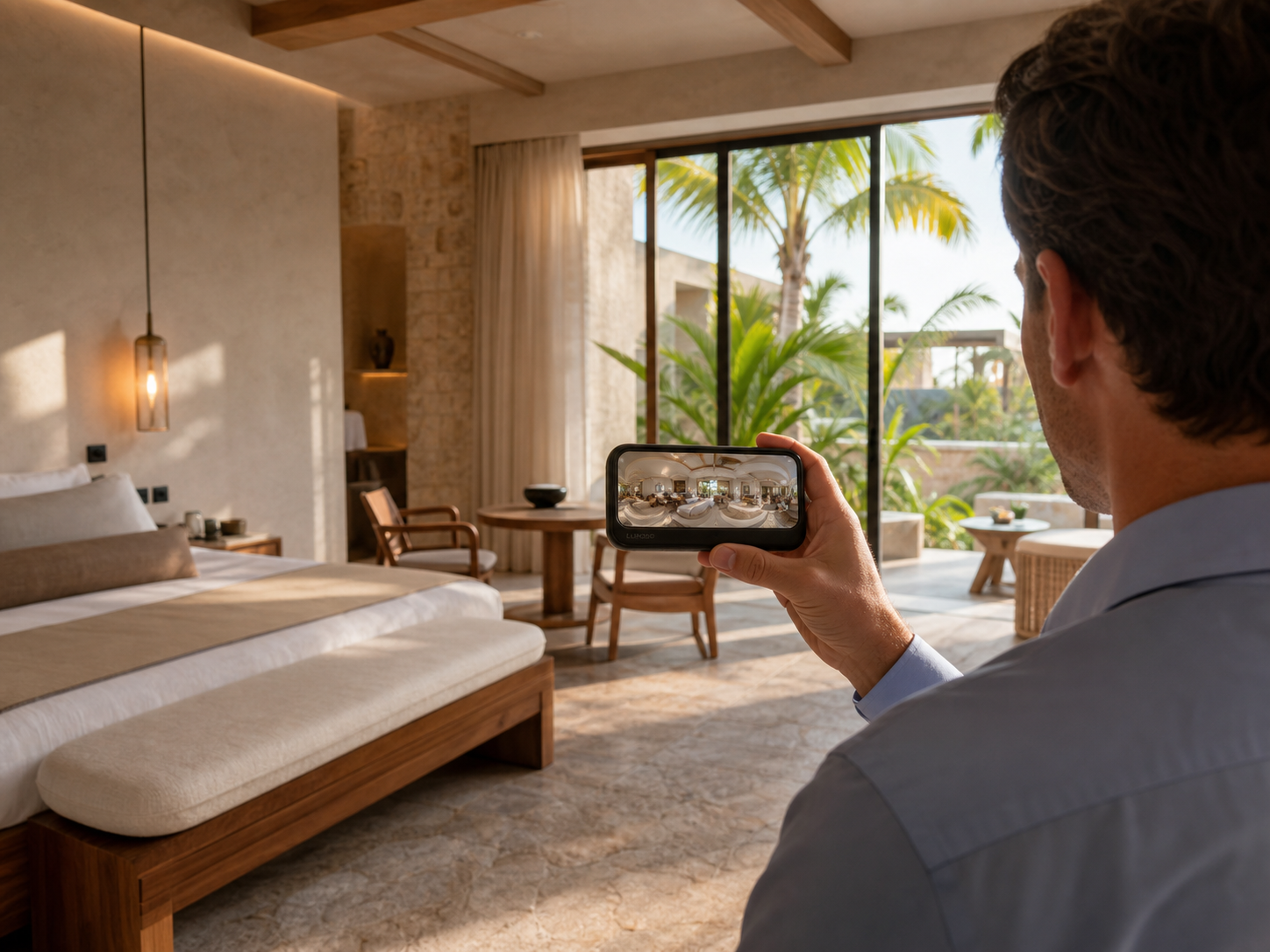
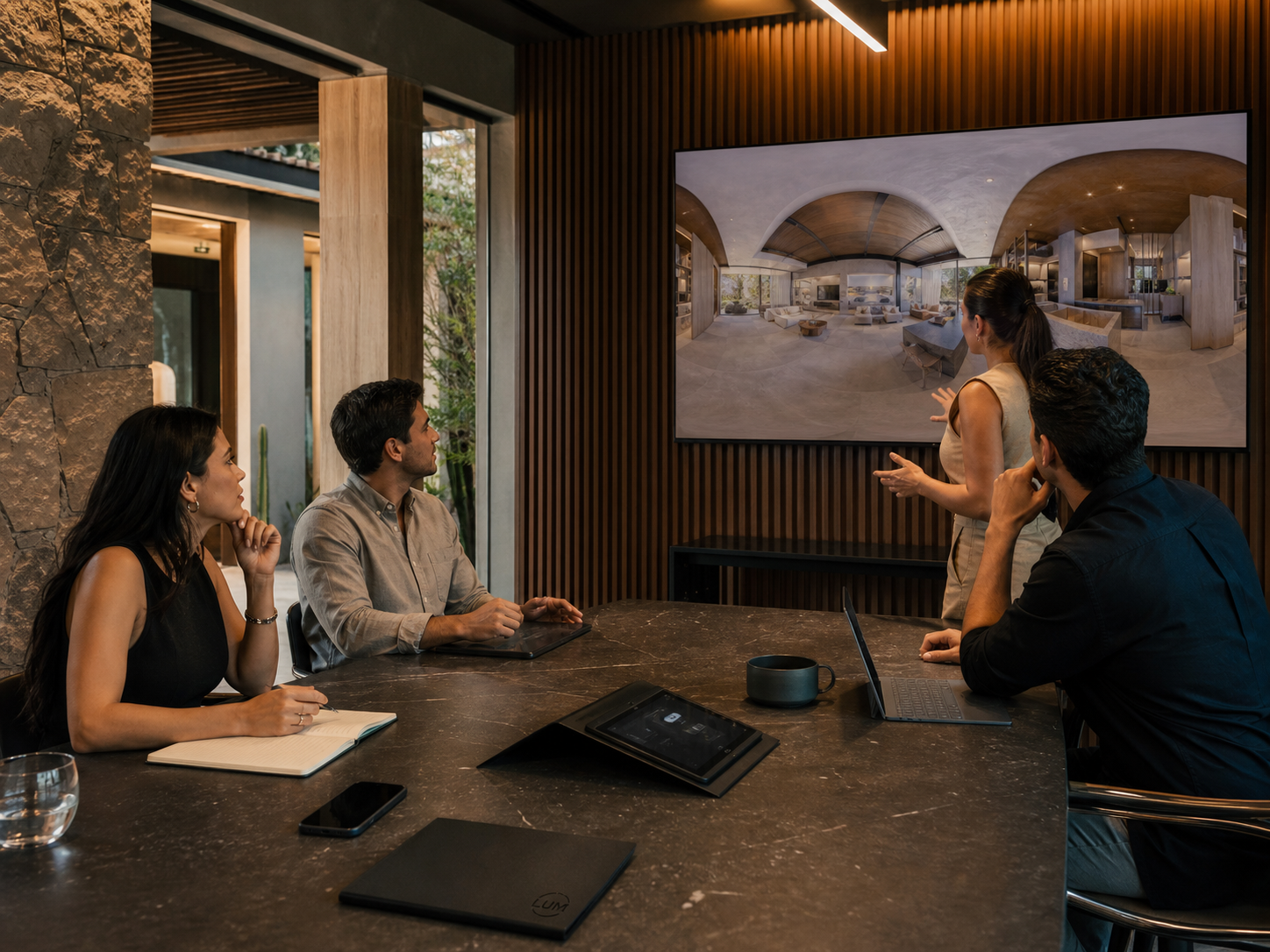
The quality of a venue's 360 tour—and of the 360 photography for venues and businesses that goes with it—depends almost as much on preparing the space as on technical production. The most beautiful venue can produce a disappointing tour if it's captured at the wrong time or without proper preparation. These are the points we go over with venues and businesses before capture begins:
Capture time determines the atmosphere. A venue that lives on its sunset dinners with an ocean view should be captured at that moment, not at noon under overhead light with empty tables. The light the diner will experience is the light that should be in the tour. If the venue runs two distinct atmospheres—casual lunch and luxury dinner—it's worth producing two captures at different times.
The mise en place matters. Tables should be set as for real service: linens, glassware, centerpieces. The bar should have bottles and glasses arranged. The plants should be watered. The tour shows the venue at its best operating self, not an empty room mid-setup.
Staff shouldn't appear. People in the tour—unless it's intentional and carefully directed—are distracting and can make the space feel less exclusive. Most luxury venue tours are captured in the window between setup and service, when the space is ready but there are no diners or staff on the floor yet.
The route has to make narrative sense. The tour's starting point should be the entrance hall or the exterior of the venue. The route moves logically inward—reception, bar, main dining room, terrace, private room if there is one—mirroring the path a diner would take on arrival. A tour that starts in the kitchen or the restroom disrupts the experience and reduces its effectiveness as a conversion tool.
LUM360 Production Stack · Venue in Cancún
Capture for Google Maps
- Certification
- Google Street View certified photographer, so the tour integrates directly into the business profile.
- Output
- Tour visible inside Google Maps, designed so diners can explore the venue before deciding.
- Impact
- More engagement with the local listing and a stronger visual signal for venue searches in Cancún.
HDR Capture of the Space
- Team
- Full-frame camera with a fisheye lens and a 7-stop HDR workflow to preserve light, texture and atmosphere.
- Points
- 10–16 strategic positions: entrance, bar, main dining room, terrace and private areas.
- Timing
- Capture scheduled around the venue's real atmosphere: sunset, evening or a prepared service.
Tour for the Website
- Engine
- 3DVista Virtual Tour Pro, self-hosted with no monthly platform subscription, so you keep control of the digital asset.
- Hotspots
- Direct reservations, menu, private events, accessibility and location, built in where diners need to decide.
- Analytics
- GA4 to measure exploration time, hotspot clicks and conversion to a reservation or contact.
- Delivery
- Complete source code: the tour stays a digital asset owned by the venue.
One last point on return on investment before we wrap up: in the Cancún venue and business market, where net profit margins are thin and the difference between a full Tuesday and a half-full Tuesday can decide the week's profitability, the 360 tour pays for itself extraordinarily fast. If you're wondering about the price of a 360 virtual tour, consider that a 30 percent increase in direct reservations—even if that figure is conservative and applies only on some nights—can add up, in absolute terms, to a figure well above the tour's production cost within the first two or three months. The tour doesn't expire: it keeps working every time someone opens the venue's Google Maps profile or visits its website. To understand in more depth how that presence acts as an authority signal in Cancún's local SEO algorithm, the article on Cancún local SEO in 2026 and the tour as an authority signal on Google Maps covers the mechanism in detail.
If you want the technical detail on connecting the tour to Google Tag Manager and measuring exactly which hotspots convert best and which source the booking diners come from, the article on measuring engagement with GA4 and GTM covers that whole architecture. And if the venue is part of a boutique hotel and you're also interested in the direct-booking angle versus the OTAs, the boutique hospitality guide is the natural companion to this article.
Your venue already delivers a great experience. Diners just need to know it before they book.
If your venue in Cancún or the Riviera Maya has an atmosphere worth showing, let's talk. A 30-minute session is enough to evaluate which type of tour fits your customer profile and your reservation goals.
Frequently asked questions
Why does a 360 tour help win the reservation before the diner arrives?
Because the decision now happens on the phone, hours before visiting the venue, and what sells first is the atmosphere. A 360 tour lets people feel inside the space, walk the dining room, step out onto the terrace and picture where they'd sit. That micro-moment of choosing a table in advance triggers emotional anticipation and speeds up conversion. In Cancún and the Riviera Maya, venues and businesses that integrate the 360 tour into their Google Business Profile and website report increases of +30% in direct reservations.
How does a 360 tour affect Google Maps ranking, and how long until it shows?
Google Maps prioritizes profiles that generate more engagement; a 360 tour can increase the time spent on the listing, a relevance signal. The effect isn't immediate: it usually takes weeks and builds over time. The greatest value comes when the tour is paired with a complete Google Business Profile, accurate information and measurable calls to action.
Which is better: integrating the tour into Street View or having a self-hosted tour?
Street View provides direct visibility inside Google Maps, while a self-hosted tour allows higher resolution, hotspots with menus, direct reservations and GA4 integration. The strategy can combine both: Street View for discovery and your own tour to drive conversion on your website.
Which hotspots work best for converting inside the tour?
The most useful ones answer a real question at the exact spot where it comes up: direct reservations next to featured tables, menu and prices in the table area, information for private events, location and valet at the entrance, and accessibility details where relevant.
How do I prepare the venue, and what's the recommended production workflow?
It pays to capture at the time that reflects the real experience, set up the mise en place, keep people out of the frame unless it's intentional, and design a logical route from the entrance through reception, bar, dining room, terrace and private areas. The recommended workflow combines capture for Google Maps, HDR capture and building the self-hosted tour with hotspots and analytics.